How to Get Book Reviews (and Why You Need Them)
Q&A with Joe Walters of Independent Book Review
There’s a catch-22 that many indie authors face when promoting their recently published books.
To attract new readers to your audience, you need some solid reviews. Not just reviews from friends and family on Amazon, but reviews from genuine reviewers, in genuine publications: magazines, blogs, podcasts, bookstagram—the more people talking about your book (and ideally giving it 5 stars) the better.
But how are self-published authors supposed to get reviews, without the help of a big publisher or publicist?
That’s a question that was on my mind a few weeks ago, when I attended the American Writers and Writing Programs conference in Baltimore. And as fate would have it, I ended up just a few booths away from someone who was extremely qualified to answer my questions: Joe Walters, Founder and Editor-in-Chief of Independent Book Review.
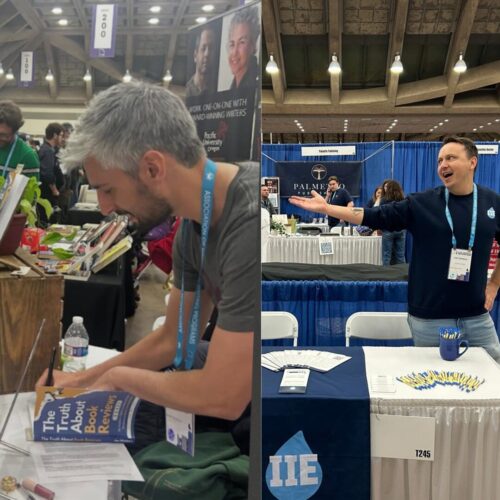
After we packed up and left Baltimore, I reached out to Joe to keep our conversation going. We decided to exchange interviews, since his readers have lots of questions about book coaching and novel editing. (Here’s my interview with Joe, all about working with an editor.)
If you’re wondering how you can get solid reviews for your upcoming book, take a look at these insights from Joe.
Tell me about yourself and how you started Independent Book Review.
I’m Joe! I’m the guy who’s promoting indie books, running beta reading services, and eating entirely too much candy in his garage in Pennsylvania.
I got my start in publishing as a volunteer reader for a now-defunct literary magazine before I became a full-time marketer for a small press in Oregon. It was the start of the coolest career I could have asked for, but I also couldn’t stay in Oregon any longer. (Too far from home!) So when I packed my bags back for PA, I brought the job with me—sort of. After realizing how hard it was to get coverage for indie authors as a marketer, I decided to start my own platform dedicated solely to reviewing indie authors. They wouldn’t be battling giants at my company.
Eight years later and now Independent Book Review has reviewed over 2,000 indie books, releasing about two per weekday. I’ve got 34 reviewers reading for me, and we feature starred reviews, book lists, and tons of reader- and writer-focused content. Come hang out.
What should new authors know about book reviews?
Everybody’s going to tell you that you need them: That if you want to sell books, they’re an essential ingredient; that bookstores and libraries want to see them before they stock your book; that you won’t grow your audience unless you show up in front of someone else’s.
And those people are right.
But it’s also about you and your publishing journey. I hope that the people who read your book in the real world talk to you about their reading experience seriously, but it’s also pretty darn possible that you get overt kindness and vagueness from most of them. The best way to get real reader feedback is to get real reader reviews.
How do book reviews “work”? What is the process like for authors?
Well, they’re not just going to show up automatically. You might publish with a press that does serious behind-the-scenes work to increase your reviews, resulting in a natural avalanche of more of them because word of mouth has already started, but that’s not the case for most authors.
You have to find the people, send the emails, catalog it all, buy the services, lay the groundwork. And then you have to keep doing it.
Then after you get the reviews, you have to actually use them. If a review comes with some publicity, cool, but the best way to capitalize on reviews is to implement them in your own marketing efforts. You get a cool media review? Post about it! You get a blurb from a high-profile person or company? Put that thing in graphics and on websites. There are a ton of ways you can use reviews. If you want a list of places you can put them, I’ve got a freebie ebook when you sign up for Write Indie.
How is it different for indie authors vs. small press?
I define small press authors as indie too! Why?
Because life is so very similar!
When you publish with a small press, you’re getting help. They have the guidance, some resources, and their own audience they’re building. Some of them have had years under their belt to cultivate relationships and increase book sales. These are all pluses.
But they also want you to be doing the behind-the-scenes work. They’ll teach you how to do it, but they won’t take all the work hours away from you. They couldn’t. They have more things to do as a press than target reviews only for you.
Most of the time, you have the upper hand if you publish a small press. That’s true. You can get reviews from people who recognize your press’s name and you can pitch with more outside validation than if you were a self-published author pitching on trust alone.
What kind of people provide book reviews at IBR?
Cool ones!
I’ve got 34 reviewers on staff right now. They represent a spectrum of genre interests, experience levels, and writing styles. Many of them have experience as book reviewers for other platforms, while others are librarians, booksellers, authors, bloggers, and editors.
But experience isn’t what I look for most in a reviewer. I hire 95% based on the writing sample. I want to see that a reader is engaging honestly and thoughtfully with a book beyond the surface. I want them to tell good stories in the summary and genuine opinion on the author’s execution. If a strong reader hasn’t written formally before, I’ll be glad to be their first one.
You’ve received a book review. Now what? How does it fit into a bigger marketing picture?
Put it to use!
Different kinds of reviews can be used in different ways. For example, I don’t recommend you take a great quote from a review on Goodreads and put it on your book cover, but if you get a great review from a high-profile person or company, I would.
First step: Look for quotes you can use in your marketing material. Anywhere from eight words to twenty-five. For longer ones, I usually aim for a nice mix of praise, summary, or what makes your book unique.
Second step: Put it somewhere. Amazon reviews, you usually don’t want to post about, but you could put a few together in a graphic and post it on social media. If you get a single review from a platform like IBR or a notable author, you can use that on its own. Maybe you make a social media post about it or share it in your newsletter, or maybe you just put it in the editorial reviews section on Amazon.
Don’t depend on a review’s publicity to do something for it. Go out and use it.
When should authors start looking for book reviews?
If you want to put yourself in the position to get the most reviews possible, I’d say about eight months before confirmed publication. Some platforms (though not all) require as far out as a six-months in advance for submission. So if you don’t start looking until three months before, you won’t even have the option to pitch them.
But if you don’t hit that marker, that’s still okay. Even if you didn’t start looking for reviews until after publication, you can still get them. It’s just that you missed some opportunities—like building a launch team—that have real gravitas and can produce good results.
I’d say you usually have a couple years after publication to get media reviews, but you can really keep chasing smaller ones—social media, bloggers, customer reviews—for as long as your book is relevant.
What are the most common mistakes authors make when seeking reviews?
Thinking that they’re going to just come to them is #1, and it’s not particularly close. Another is that they’re not that important. But if you’re trying to sell books on Amazon and you only have one review on there, you’re not going to make new readers want to buy your book. It’s a trust thing. Gain their trust.
Actually pitching reviewers is a whole different story. Some authors pitch us with the subject line reading, “Will you review my book?” and just a link of their book on Amazon. That’s… not going to do it. Follow submission guidelines and send enticing, professional pitches.
What happens if you get a bad review?
You’re going to be okay. Remember that this reviewer is not every reviewer. These people are readers talking to other readers. They’re free to say these things, and you’re free to listen to them or ignore them.
The best thing to do when you get a bad review is to get more of them. Seek more outside opinions not only because they could be totally wrong and off-base, but they could also be partially right. You don’t want to harp on a bad review; make sure those positive ones are speaking as loudly as that one negative one. But hey, if they make a good point, they make a good point.
Want to learn more about how to get book reviews? Subscribe to Joe’s awesome newsletter, spend some time on the Independent Book Review blog, and submit here when you’re pitch.
Don't let errors sink your reviews
Plain and simple: If you want good book reviews, you need to work with a book editor. It’s not uncommon for perfectly well-written books to receive negative reviews because of issues an editor could have helped them fix: underdeveloped characters, plot holes, grammatical errors, typos.
If you’re planning your path to publication, get a trusty editor on your side.
Submit a sample of your manuscript, and you’ll be paired with the best editor for your specific audience and genre who will provide a free sample edit (even if you’re not done working on the script).
We hope to see your work soon!