Categories
Resources for Authors Writing Advice

How to write a book from scratch

So, you have an idea for a book. Excellent.

Every great novel starts with an idea, but few of those ideas ever make it to bookshelves. Why? Because writing a book from scratch takes a lot of blood, sweat, and tears (and maybe a few bottles of bourbon).

Fortunately, with some smart planning and disciplined practice, you can take that kernel of an idea and get it onto the page.
Whether all you have right now is a premise, or you’ve made a start and become stuck in a novel writing rut, you’re in the right place. The team of book editors and experts at Invisible Ink have put together this guide to get you from idea stage all the way to a manuscript ready to hit the shelves (or e-libraries).  

On that note, Invisible Ink will shortly have more guides for DIY self-publishing and marketing, so be sure to check back soon.


Forming good writing habits

Writing habits aren’t ingrained in us—we have to learn them first.

Even then, some of the most renowned writers in the world are self-proclaimed masters of procrastination.

That’s why setting yourself up with good habits from day one is every bit as important as your storyline.

Become a master of self discipline

There will be days where you don’t want to write. Where the blinking line on your Word document teases you with every second that passes without new words on the page.

Write anyway

Setting up your space

Being organized doesn’t start and stop with your pen and paper (or Word document).

Creating a good writing space can help give you a physical realm where you can enter into the right mental space for your work.  

A tidy desk, ergonomic chair, and calm setting are the basic key elements, but think about what sparks inspiration. Perhaps having living things—such as plants or a fish tank—will bring out your muse. Having a bookshelf stocked with your favorite authors and dictionaries can also help alleviate those blank-minded moments.

That said, a good writing area doesn’t have to be a spot in your own home. You can write in libraries, cafes, coworking spaces, and even places such as airports. Your comfort and concentration is what is most important, whatever that means for you.

Pro-tip: Keep a pen and a notepad on hand at all times should genius strike at an unlikely moment.   

Tools for writers: What software do you need?

Let’s take a moment to be grateful for the industrial revolution. This was the spark that gave us typewriters, and today, you can easily access novel writing software that Charles Dickens could have only dreamed of.

All you need to do is a little research to make the most of them. Here are some of the most common software tools for writers today:

  • Microsoft Word The most common document creator, and a vital tool if you plan to submit your novel to editors, agents, and publishers.
  • Scrivener Many writers swear by this organizational document creation tool, ideal for writers who like lots of organization.
  • Dropbox A good option if you plan to write on several machines, such as a laptop or desktop. Store all your documents in one place.
  • Evernote This tool allows you to take notes, create lists, and to-do lists. A helpful service for those who like everything noted and ordered in one place.
  • Hemmingway App A clever app that highlights ways to improve your copy, such as by pointing out passive voice. A good tool for your first draft.
  • iMindMap Mind mapping software that helps you create clear, beautiful maps to plan your outline (if you prefer this method).
  • Blurt A multi-function writing tool that highlights errors, prevents you from editing your own work too soon, and keeps you focused.
  • Dragon Naturally Speaking A voice-to-text tool that transcribes your words up to three times faster than typing. Ideal for getting a lot of words down quickly, but you’ll likely need to do more editing down the line.

Defining your genre and audience

Beginning a novel isn’t about sitting down and simply starting to write—there are a few vital planning steps to take before you can put pen to paper (or fingertips to keyboard).

Your first steps will instead be to make some key decisions and create some form of an outline for your novel. (Don’t worry, pantsers, in your case this will be a very general outline mostly for continuity’s sake.)  

Which genre is your novel?

Your spark of an idea might be what inspired you to write a book, but if your goal is to sell it, you’ll have to think about the genre, and by proxy, your audience.

Many writers will stick to genres they love to read themselves, which keeps passion alight and gives them a strong baseline understanding to start from. Others will want to take a step outside their comfort zone and try for a new genre or audience that may not be what they’re used to.

Once you have a firm idea of your genre in mind, take steps to familiarize yourself with it:

  • Read popular books within the genre
  • Read bad books within the genre
  • Read interviews with popular authors in the genre
  • Learn about the usual tropes to know what people expect (and how to surprise them)
  • Research reviews—what do readers like and dislike about books in this area?
  • Put together notes on the typical reader for this genre (age, gender, interests)

As soon as you know your genre and your typical audience member, every tough decision you have to make during writing can often be solved by asking yourself:

“Will my reader enjoy this?”

Become part of a writing community (or three)

Sooner or later, you’ll need to rant, ask for support, bounce ideas around, or simply share your thoughts with a group of people who know exactly what you’re going through. So where can you go to find these communities?

Twitter

Though there are many Facebook groups for writers out there, few are as active and far-reaching as Twitter. To find these communities, all you need to do is search for some of these hashtags, then start following and interacting with others who use them.

  • #WriterCommunity
  • #5amWritersClub
  • #amWriting
  • #WritersLife
  • #IndieAuthor
  • #Romance #YA #Paranormal (etc)
  • #SmashWords
  • #WordCount
  • #WriteChat

What is NaNoWriMo?

November is National Novel Writing Month, known as NaNoWriMo (there’s another hashtag to look for). Each year, participants strive to write a novel in 30 days. They aim for a manuscript of 50,000 words in this time, and have the full support of an online community in doing so.

Similarly, Camp NaNoWriMo is an online community for writers. However, this initiative sees writers take a “virtual writers retreat”, where you can work on anything from poems to short stories to novels in a creative online environment every April and July.


2. Determine your preferred organizational method

The process of creating multiple drafts, weaving a storyline (or several), crafting engaging characters, and every other element of book writing is complex.

Even if you aren’t usually the type to write out a highly detailed outline, you will need to organize your thoughts and ideas, character arcs, twists, dramatic moments, and settings into some form of an outline.

Plotting vs Pantsing vs. Plantsing

This is around the time when most writers will find out if they’re a “plotter” or a “pantser”—two distinct novel writing outline methods.

Plotters are the organized type—they like to lay out all of the details of their plot from start to finish, and they probably own an array of Post-It notes.  

Pantsers are named for flying by the seat of their pants—these writers like to let their story lead them, rather than the other way around, and largely make up their plot as they go.

Plantsers is a relatively new term, named obviously for people who still like an overarching novel outline, but don’t need it to be as detailed and thorough as the plotters of the world.

Each of these methods is valid, and what’s most important is what feels most comfortable to you. However, even if you are firmly in the “panster” camp, some organization throughout the process is a must.

There will always be room for off-the-cuff ideas and twists in your novel, but having a roadmap from the start will help you move through the process, and keep you on track when it starts to feel overwhelming.

How to write a novel outline

Outlining your novel will be key to your success, and there are countless ways to do it.

No matter the method, an outline serves to:

  • Avoid plot holes
  • Keep you focused
  • Help you finish faster
  • Ensure the storyline makes sense
  • Let you work out of order
  • Define your writing goals

Pantsers, you might not be looking to choose an outlining method per se, but you will still need some way to keep track of everything. This could be a spreadsheet to note down character details (such as appearance and traits), place-name spellings, and loose ends. Whatever works for you!

Let’s dive right in.

The Snowflake Method

One of the more popular routes in outline creation, the Snowflake Method, is the brainchild of author Randy Ingermanson. In this method, you start with a basic plot and expand it little by little.

To begin, write a one-sentence summary of your novel. Expand this into your “elevator pitch”, a short paragraph explanation. Next, expand that into a page, and so on and so forth.

Continue until you have a fully formed snowflake, complete with characters, plot points, problems, important scenes, and other details. If you want more details on how to write using the snowflake method, stay tuned—we’ll have a whole blog dedicated to it soon.

The Freytag Method

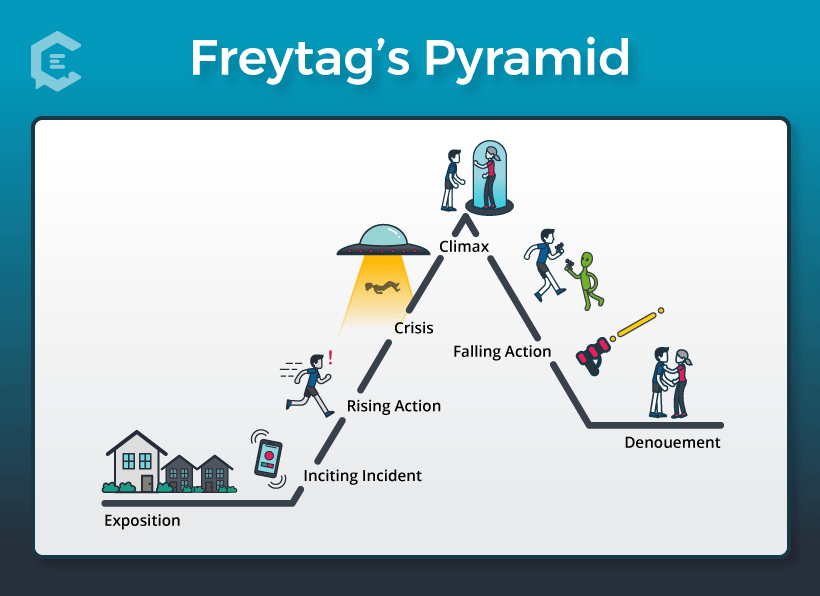
Freytag's Pyramid | Invisible Ink EditingThe Freytag Method mirrors a common story structure you have likely already seen: exposition, rising action, climax, falling action, and denouement.
This style, created by German novelist Gustav Freytag, allows for a basic level or organization and structure but leaves the finer points up to your imagination.

To follow this structure, you can essentially map the basics of your plot onto this structure, then begin writing, expanding each one until you have a fully formed manuscript.

The Chapter-by-chapter Method

This method is an obvious one, and it goes by many names, but none so transparent as the “chapter-by-chapter method.”

With this approach, you will come up with a title for each chapter, then note down key points or events for each chapter.

If the drafting process intimidates you, this route can be a good option as you’ll know you have everything in place to work through your first draft quickly.

It will naturally take longer to make an outline one chapter at a time, but it will make your draft faster and easier.

The Reverse Method

In the Reverse Method, the first thing you do is write the ending.

As soon as you’re happy with it, work backwards. Add a beginning, and fill in the major plot points that work towards this ending.

Knowing exactly how it all ends from day one will help you spend the entire story working towards those closing chapters.

The Draft Zero Method

Dyed-in-the-wool pantsers, this may be the method for you.

The draft zero method is also known as the “pantser’s compromise.”

Instead of an outline, you simply start writing. And instead of a full draft, you write 100-200 pages of ‘draft zero’—the draft that comes before a draft.

This method lets you fly by the seat of your pants, but still have a chance to work out plot holes and plan for writing devices with this quasi-outline.

No matter your planning style, once you feel as though you have prepared enough, it’s time to start the first draft. Before you dig in, make sure you understand what elements go into a good novel…

The 10 essential elements of a good novel

There are just 26 letters in the alphabet, and even though you’ve likely been familiar with them since you were a child, it’s surprising how daunting they can become when it’s time to start on your book.

That said, there’s only one real way to write a novel—one letter at a time.

Here are the elements of a good novel that you will need to remember as you work through your first draft.

1. Showing vs Telling

Note: Check out our full guide on mastering showing vs. telling.

It’s one of the most common writing tips across all forms of written work, but even then, there is still no way to understate the importance of showing instead of telling.

In fact, publishers will regularly turn down manuscripts simply due to too much reliance on telling. This style is dull for readers, and prohibits you from sharing a compelling and realistic world.

The good news is, even if you have created a habit of telling all of the time, it is something you can work on and improve with advice, practice, and great editing.

Learn how to kill those bad telling habits and share your story with the world by showing with our in-depth guide on how to master showing vs telling.

2. Story arcs and plot styles

All stories that have ever been told, from Hamlet to 50 Shades of Grey, fall into one of just a smattering of plot styles.

Also referred to as story arcs, these categories encompass a huge bulk of the tales told throughout human history—and some of today’s most popular novels fall into these categories as well.

Of course, there is some disagreement about exactly how many there are. Some observers note just seven, while others count as many as 20 or more.

In Christopher Booker’s (an aptronym if there has ever been one) The Seven Basic Plots, he covers nine overreaching plot types:

  • Rags to riches (a commoner finds greatness)
  • Comedy (a humorous, satirical, or happy-ending-style novel)
  • Tragedy (the hero fails greatly and is perhaps destroyed in the end)
  • Overcoming the Monster (the hero destroys a great evil)
  • Quest (the hero goes on a journey for a great prize)
  • Mystery (the hero attempts to uncover the truth)
  • Voyage and Return (the hero discovers and loves a new world, but eventually returns)
  • Rebirth (a character is trapped in a terrible situation, then freed)
  • Rebellion Against “The One” (a hero rebels against an all powerful entity)

Some of these may resonate with you, or your novel may fall into more than one of these categories. Still others may not find that any of these archetypes fit, and that’s fine as well. No matter where you fall, however, you still need to have a beginning, middle, and end.

3. The beginning

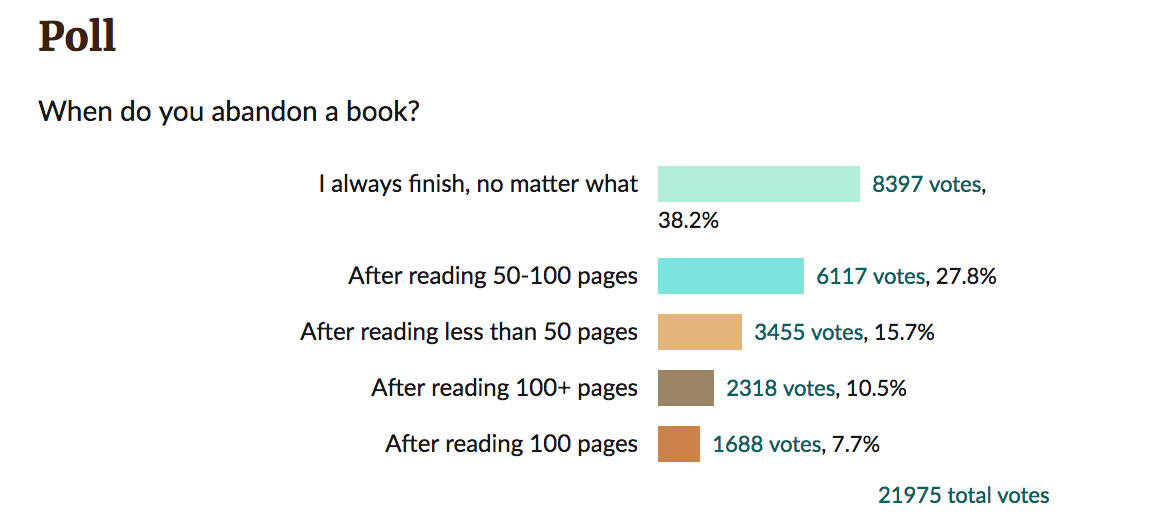
Not only is the beginning vital to grabbing a publisher’s attention, the real test lies with your reader. In fact, many readers these days follow “The Rule of Fifty,” where if a book doesn’t grab them in the first 50 pages, they give up on it.

When Readers Abandon Books | Invisible Ink Editing

There are many ways to create a gripping beginning. Keep in mind that if you genuinely think it would appeal to you as a reader, it will likely appeal to your audience, too.

Here are a few techniques to try:

  • Surprise, delight, intrigue, or terrify your reader in the very first line
  • Begin in a scene, rather than with exposition
  • Up the stakes with a big turn of events
  • Establish your hero as relatable and likeable
  • Don’t go into too much detail (you have a whole novel to add detail)
  • Feature a cliffhanger in the first few pages
  • Create an engaging setting

4. The middle

The middle of the story is often the toughest to write. Writers tend to know how they want it to begin and end, but the middle can be murky, and it’s common for the pace and intrigue to slow down in this section.

Here is a good time to fall back on your novel outline—this will help drive you through the middle of the story, include points of interest, and keep your reader hooked until the final payoff.

Try these novel writing tips:

  • Create new complications or obstacles for your hero
  • Write your character into a corner
  • Add a sub-plot or two (that tie in to the main story arc)
  • Change the setting
  • Expand on minor characters
  • Introduce a plot twist

5. The ending

The final act of your book is can be very exciting to write, but it brings its own challenges.

You arrive at the climax of the story arc, and as a writer, you start to see the light at the end of the tunnel. For these reasons, some writers will be tempted to rush through this stage, but it’s important to pay just as much attention, and give just as much care to this section as any other.

Here are a few ways to ensure a satisfying ending:

  • Go for the heart—make your reader feel something
  • Ensure the end is logical—any big surprises should still make sense
  • Create a satisfying ending, even if your story is a sad one
  • Complete your character arcs
  • Leave something to the reader’s imagination
  • Avoid clichés and cop-outs (a deus ex machina is generally considered a no-go)

6. Compelling characters

Your characters are the heart and soul of your story, and if your reader doesn’t care what happens to them, you’ve got a serious problem. Characters are often the most memorable part of a good book, so if you want to know how to write a novel that sells, focusing on characters is smart.

Realistic characters

One of the most important character traits is that every single one of them must be realistic. No hero is without their flaws, and it’s extremely rare that a villain is completely evil. Even Lady MacBeth and Nurse Ratched had their believable (if horribly misguided) motivations and character traits.

Likeable characters

Your characters must also be likeable. It should come as no surprise why so many heroines in romance novels love books—that’s a shortcut to ensuring the reader feels some familiarity with the protagonist. Similarly, that’s why so many protagonists have tragic pasts (Harry Potter and Batman), as feeling empathy for a character is an easy way to become attached to them.

Character flaws

Though your main characters should be likeable, they also must have flaws to make them realistic. No one is perfect, and a protagonist that has no weaknesses or dislikeable traits will likely bore your readers. Some flaws your characters might have to make them more interesting:

  • Impulsivity
  • Prejudice
  • Dishonesty
  • Extreme pessimism
  • Blind optimism
  • Awkwardness/poor social skills
  • An unpredictable temper
  • A sarcastic/cynical attitude
  • A lust for power

7. Natural dialogue

Compelling characters also don’t speak like robots. If your dialogue is stilted or outright unrealistic, it will be tough for the reader to immerse themselves in the scene and make that connection.

8. Character arcs

Finally, the most compelling characters are those with arcs. A character arc is the transformation of a character throughout a story, and it can be a physical change, a shift in beliefs or values, a new personality, or practically anything in between.

From good to bad, bad to good, sad to happy, shy to sassy—so long as there is a believable and event-driven change in your character, they will likely be far more engaging than a one-note protagonist.

9. A supporting cast

Though there are some books out there that have only one or two characters, most books have a cast of characters to round out and reflect your leads. Secondary and tertiary characters can be anyone from your leads’ family members, friends, lovers or colleagues to complete strangers who somehow cross paths with your protagonist.

Though they will have less “air time” as your lead characters, they still must be compelling and as realistic as your lead cast. If you can’t find a way to make them realistic and valuable to the plot overall, then they will likely be cut by your book editor.  

10. A strong setting

From jail cells to Jurassic Park, a good setting is a telltale sign of a strong novel. The backdrop of your novel can almost be a character itself if you describe it well and use it to help move the plot forward.

A novel setting doesn’t have to be outlandish and extreme—some of the best stories are told in suburbs, kitchens, and office buildings. But remember that your ultimate goal is to draw your reader into a brand new world—how you describe that world can make or break the reading experience.

Completing your first draft

With all the essential elements in place, it’s go time. Now comes the moment when you truly start fleshing out a draft, but first…

Choosing the right narrator

The rule of thumb in finding your narrator is to do whatever feels natural to you. The narrative style will play a key role in outlining your story, as it will be key in sharing information with the reader.

Here are the six main types of narrator:

First person

When your story is told from the perspective from one of your characters, usually the protagonist. Example: “I woke to the sound of someone banging on my door.”

Second person

A rare narrative style, second person speaks directly to the reader with the use of “you.” Example: “You woke to the sound of someone banging on your door.”

“You are about to begin reading Italo Calvino’s new novel, If on a winter’s night a traveler. Relax. Concentrate. Dispel every other thought.” – Italo Calvino

Third person

Similar to the first person, except ‘he’ or ‘she’ is used to describe what a character is doing, feeling or thinking. Example: “She woke to the sound of someone banging on her door.”

Omniscient

An omniscient narration style allows the narrator (usually not a character but more the voice of the storyteller) to know all things, tell the story from multiple points of view and share the thoughts and feelings of each character.

Dan Brown’s Da Vinci Code is a modern example of omniscient narration, as the reader learns what the characters are doing and thinking, and is also offered additional information outside of character movements.

Unreliable narrator

When a narrator either bases their telling of the story on incorrect information or assumptions, or purposefully deceives the reader.

Consider Vladimir Nabakov’s Lolita. Narrator Humbert Humbert constantly justifies his shocking acts with his own misguided views on other characters in the novel, making him unreliable in offering an accurate retelling of events.

Observer

When a narrator is either first or third person, but is not part of the major story. This narrator is also sometimes known as a witness.

A famous example is The Great Gatsby. Narrator Nick Carraway is Gatsby’s neighbor, but not as central a character in this novel such as the likes of Jay Gatsby or his cousin Daisy Buchanan.

Choosing your tense

Your tense is the when of the story. Is it happening as the reader turns the page, or is it happening in the past?

  • Past tense is often the default tense, and while it is not intrinsically better or worse than present tense, it is often seen as the easiest for new authors.
  • Present tense is less common, and again neither better nor worse than past tense. It is more commonly used for novels with a lot of action (think Hunger Games).
  • A mix of tenses is also an option. Your novel can be set in the present tense, with flashback chapters in the past tense.

Either way, it’s extremely useful to decide on your tense before you start writing. Changing from one to the other half way through a novel can take a lot of time to alter after the fact.

Writing the damn thing

Once the planning stages are complete, the toughest part about novel writing is simply sitting down and getting it done.

Your only goal: write every day.

There are some methods you can use to help yourself stick to a daily writing schedule:

  • Book writing time into your calendar
    • Choose the time when you feel most motivated, whether that be first thing in the morning or just before bed
  • Switch off your phone
  • Block your social media (apps such as Offtime can help here)
  • Make handwritten notes instead of digital ones
  • Write in a non-linear fashion (write a scene from the middle or end of the book if you feel more interested/engaged in that scene)
  • Change your setting (writing in a coworking space or café instead of at home)

Don’t forget that this first draft is just that, a draft. No one will see it but you, so it doesn’t matter if that sentence is a bit cliché, or that piece of dialogue isn’t sharp enough.

Editing comes later. For now, all you need to do is keep writing. Even if you don’t want to work on the novel you have in mind, you still should take time to write. Scribble notes in a journal, work on a completely different story, write a love letter to your partner—whatever it takes, put pen to page every day.

From first draft to second draft (and beyond)

With your first draft in front of you, take a moment to breathe and pat yourself on the back. The groundwork is done.

Now it’s time to polish and perfect that manuscript into something to show the world.

Defining your self-editing style

When it comes to editing, whatever works for you is the best route to take.

Some will edit as they go, while others will just focus on getting words on paper. Some will work in chronological order, while others will edit what they feel like that day. No matter what your groove is, find it and stick to it.

Edit as you go

This style means writing a sentence, paragraph, or page, then editing it immediately. It has the benefit of being able to move on knowing you have improved your work already, but it can slow you down if you spend too much time reworking your words straight away. If you find yourself getting upset about your own words, or fighting the urge to delete huge paragraphs of text, it may be best to put off editing before you get lost in a self-editing dead end.

Edit in sections

This style means editing in any kind of section. This could be a chapter, a scene, or simply everything you wrote the day before. This route allows you to get your words on paper quickly without fussing about minor issues, but also gives you time later to tidy things up before moving on to the next section.

Edit at the end

Editing at the end is often preferred by those who simply want to write the draft and get that part of the work tidied away. This allows you to write a draft more quickly; however, it can mean that you miss plot holes or other issues that you would have spotted sooner otherwise.

Self-editing is a vital part of writing your book. While it’s important to be kind to yourself and not simply delete huge swathes of writing, it’s also key to go through your work before handing it over to a professional editor.

This ensures your editor doesn’t spend their time (and your money) fixing basic mistakes and finding obvious plot holes, too many examples of telling instead of showing, and other things you should be able to spot—and edit—yourself.

You can use your own knowledge, as well as online tools and editing apps to make this essential first edit.

Here are a few simple things to watch for as you edit:

  • Convoluted words where simple words would do
  • Typos you regularly make
  • Filter words that clog up your language
  • Telling vs. showing
  • Unnecessary information and over explanation
  • Cliché sentences
  • Overused words

Need more help? Learn how to edit your own novel in our comprehensive guide.

Alpha readers vs. Beta readers

You’ve finished your first draft, given it a strong edit, and you’re ready to show it to someone.

However, the next step is not a professional edit. Instead, seek feedback from peers and workshops for another check. This stage of editing is typically taken on by alpha readers and beta readers.

Alpha readers are the very first to read a draft. They are often very close to the writer, and are absolutely trusted by the writer to read those words even before they are polished. An alpha reader’s job is to check for any major glaring errors or plot holes and provide feedback.

Beta readers come in at a later stage, usually after the first draft has been self-edited and seen by alpha readers. A writer will often have specific questions for a beta reader, such as whether the reader believes the dialogue is strong enough, or if a character’s motivations are clear. They could be a friend or family member, or even a stranger with an interest in writing or editing. Their job is to provide feedback from a final reader’s perspective.

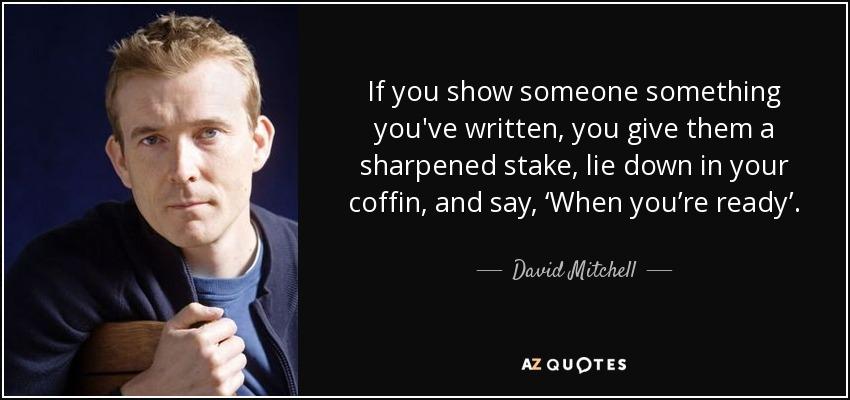
David Mitchell Quote | Invisible Ink Editing

How to handle feedback

Taking on feedback is easier said than done. You’ve probably spent months or even years on this draft, so it can be a raw and uneasy feeling to hand it over for criticism.

You will need thick skin. And you will also need to ask more than just your friends and family to ensure you receive any brutal truths that you need to hear.

To get the most out of your beta readers, you should also prepare a few in-depth questions to ensure your draft is clearly understood, and that any areas you are unsure of are addressed.

A variety of opinions is ideal, but it’s also important to trust yourself and make judgments about which pieces of feedback to ignore, and which ones to take on board. Finding patterns in your feedback is often a good indicator that something needs to change, but if you’re not sure, make a note to ask your professional editor about it.

Now it’s time for a professional editor

A professional edit can take your manuscript from good to great, or from great to excellent. It can be the cherry on top that helps you catch the eye of a publisher, or simply ensures your online reviews will focus on things other than how many typos there were in your manuscript.

Ready to lose the errors but keep your voice? Submit your work to the team at Invisible Ink Editing for a free sample edit, and a quote for the full manuscript.

How to prepare your manuscript for an editor

There are a few quick tasks you can complete to prepare your manuscript for a professional edit.

Firstly, run a spell check one final time—it’s always hard to see your own errors, but another check may pick up a few more.

Next, be sure to use standard editing format. We will soon have a full formatting guide, but for starters make sure your manuscript has:

  • 12-point font
  • An easy to ready typeface (Times New Roman is fine)
  • 1.5 or double line spacing
  • Single spaces after periods

Notes for your editor

Prepare a few notes that your editor can read before starting the manuscript, so they know a little about what to expect, and so they’re aware of any questions you may have. Your notes should contain:

  • The synopsis of the novel
  • The manuscript’s history of editing (who has read it, how many times it has been edited)
  • Any questions or concerns you have (put them in a separate document so your editor can read them before, or leave them until after their first read)

To see exactly what happens (or should happen) at each stage of the editing process, read our six-step author’s guide to the editing process.  

Final thoughts

As soon as you hit that submit button, it’s time to relax, treat yourself to some time away from the keyboard, and wait for your editor to get back to you.

There will be more work to come once your editor responds, including dealing with changes and edits, and then taking the next steps toward publication.

We will soon have guide on getting published, but for now, know that Invisible Ink Editing is with you every step of the way.

Categories
Resources for Authors Writing Advice

How to master showing vs. telling

“Show, don’t tell.”

Nearly every writer will hear these three words at some point. You may have heard this phrase in a creative writing class, or from your beta readers or book editors. It’s by far the most common piece of advice we give out to our clients at Invisible Ink Editing.

There’s no doubt that showing vs. telling is one of the most challenging parts of writing fiction. Too much telling is also one of the top reasons editors and publishers reject a manuscript. Fortunately, with practice and dedication, you can overcome it. This guide will help you understand the issue better and give you the tools you need to defeat the habit of showing vs. telling once and for all.

Coming soon: Showing vs. telling worksheets

Once you’ve finished this article, check back soon—we’re currently putting together a number of worksheets for authors who want to improve their showing ability and reduce their telling tendencies. These worksheets will cover:

  • Showing Plot | Overcoming exposition and summary issues
  • Descriptive Telling | Understanding the difference between description and showing
  • Real Characters | Making your characters do the hard work of showing
  • Believable Dialogue | Dialogue tactics to show more and tell less

Be sure to follow us on Facebook or Twitter to get updates about this article and all of our advice for authors.

The definition of “Showing vs. Telling”

Let’s start with the basics. To understand showing vs. telling, you first need to understand what each of these words means in the particular context we’ll be discussing in this post.

Telling uses exposition, summary, and blunt description to convey the plot of a story.

Showing uses actions, dialogue, interior monologues, body language, characterization, setting and other subtle writing tactics to pull readers into your story.

Showing vs. Telling means your writing paints a picture instead of simply summarizing a story’s main points.

These are the most basic definitions, but it can still be a hard concept to grasp without examples. In fact, defining these concepts is an example of “telling”: You’re getting just the facts, and not much else.

If these definitions aren’t working for you, here’s a different way to think about showing vs. telling.

The movie theater scenario

Imagine this scenario: You’ve got tickets to see the new Ghost Heist IV, which came out last week. Ghost Heist III was one of the best movies you’ve ever seen, and you can’t wait to see the action-packed car chases, the spooktacular jump-scares, and the steamy paranormal romance.

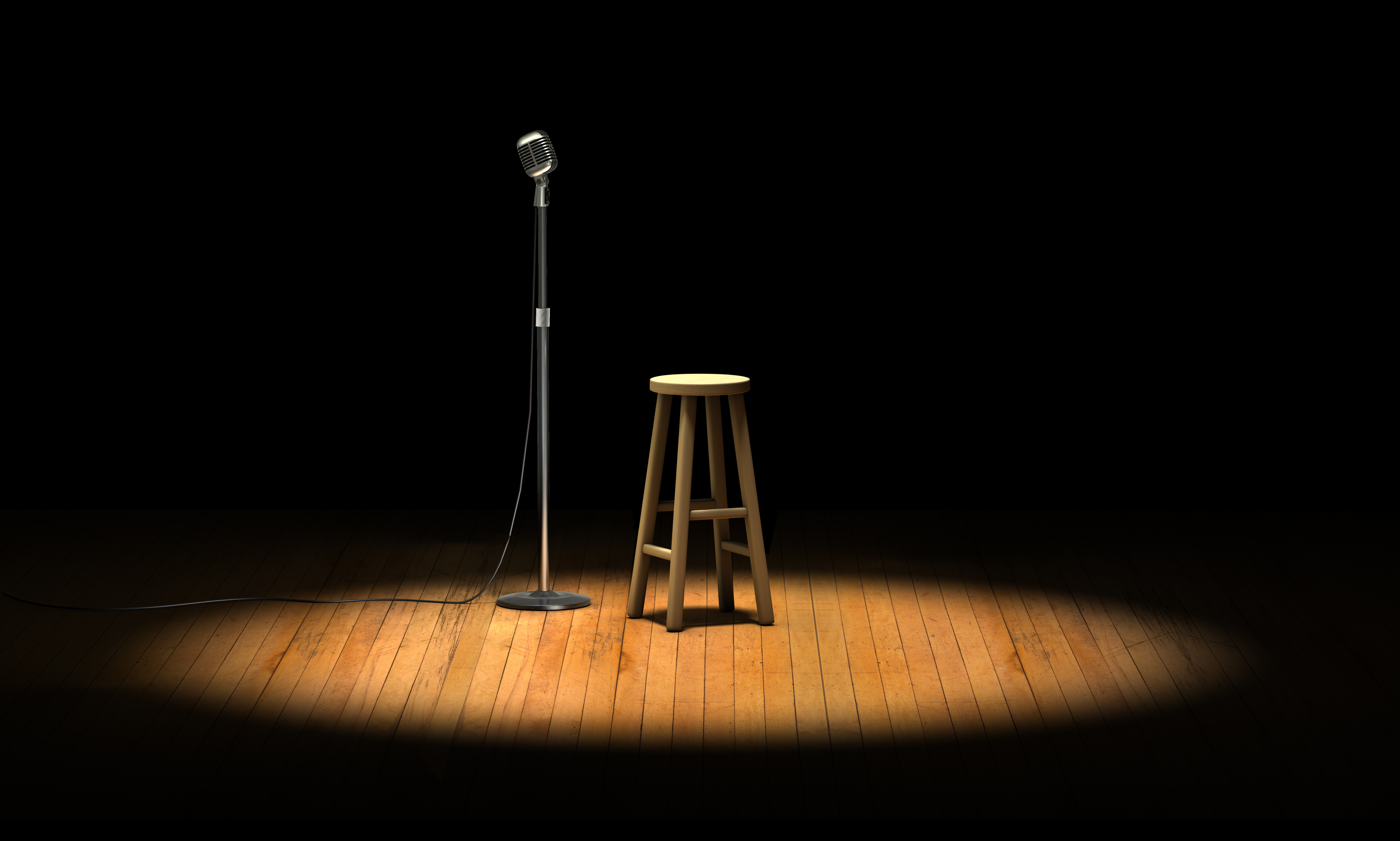
You get to the theater and patiently wait in your seat, munching popcorn amongst the other chattering movie-goers. Finally the lights dim, and you wait for the opening credits to start rolling. Instead, you see a man walk out from backstage, pulling a stool behind him.

The man takes a seat on the stool as a spotlight illuminates him. He begins to speak in a loud voice:

Microphone stand and wooden stool under a spotlight on a stage

“The opening credits are big and bold red letters,” he announces. “In the background we see a car chase in progress. One vehicle is a yellow truck, the other is the classic Ghost Rider van. They are in a nameless city…”

The audience begins to boo. A few people throw popcorn up on the stage, and soon they begin to file out of the theater. Utterly disappointed, you join the line outside to get your money back.

When people go to see a movie, they want to be transported out of reality for a couple of hours. They want to hear the big explosions and see the visuals in 3D. In other words, they want an immersive experience—that’s why theaters dim the lights and spend money on bigger, better sounds systems and screens. They don’t want to just be told the plot of a movie. They want to experience it themselves.

People read novels for largely the same reason—they want something that will take them to another world. If you rely on too much telling in your novel, you will become the man with the stool in the example above. Your readers will feel ripped off, because over-telling makes it impossible for them to feel immersed in the story. They need minute details, subtle hints, and realistic characterizations to truly experience the story.

Hopefully this helps you get a basic understanding of the importance of showing vs. telling. (If not, don’t worry—we have another example coming up a little later in this article.) In the next section, we’ll dig deeper to explore why too much telling and not enough showing can be detrimental to book sales.

Why too much telling is bad for readers

Think about what makes reading a good book so pleasurable. A novel you connect with can capture your attention for hours at a time and stick with you for years. You can fall in love with characters, or want to kill them, or be horrified by them. A good read is thrilling and exhilarating—and if a book really captures you in this way, then you know the author has done a masterful job of showing.

A book that tells too much, on the other hand, will leave the reader feeling flat or frustrated. Excessive exposition takes away some of what we love most about reading.

Telling murders suspense.

Showing in a novel is like leaving a trail of breadcrumbs for the reader. You want them to be compelled to turn the page, to find out what happens next. To do this, you need to drip-feed them information. It is true joy for a reader when a piece of information they picked up on page twenty-two becomes significant on page one hundred ninety-four. These kinds of joyous discoveries are one of the greatest aspects of reading, and why we often re-read our favorite novels.

If a good book is like leaving breadcrumbs for your reader to follow deeper into your story, then over-telling is like throwing a loaf of bread at them. By giving them all of the vital information at once, you take away the enjoyable experience a reader has of trying to figure out exactly what is going on. A reader goes into a book wanting to be entertained and perhaps challenged a bit—if they wanted “just the facts, ma’am,” they could read the synopsis of your novel and get the same emotional experience in a fraction of the time.

Telling puts up a wall.

Reading a good book should feel like jumping into the deep end of a pool. Once a reader opens the cover, they want to feel completely captured by the story. Reading should be a deep and immersive experience—which means the author needs to use deep and immersive storytelling tactics. Plain “telling” is the opposite of this. Instead of providing a diving board for your readers, you put up a wall that prevents them from getting deep inside the story.

Telling is just plain boring.

There’s no getting around it—telling a story is one of the most effective ways to bore your readers to tears. Without mystery and depth to keep them engaged, your readers will very quickly guess what will happen next, or else they won’t care enough to stick around and find out. Instead, they’ll put down your book and find something that draws them in and keeps them guessing.

Now that you understand why showing vs. telling is a big problem for your readership, let’s switch to the author’s perspective. Why is showing vs. telling such a common issue?

Why so many writers struggle with showing vs. telling

If you’re an aspiring writer, you’ve probably heard this before: “I also have an idea for a novel!” It’s something people often say after they find out you’re currently working on or have already published a novel yourself.

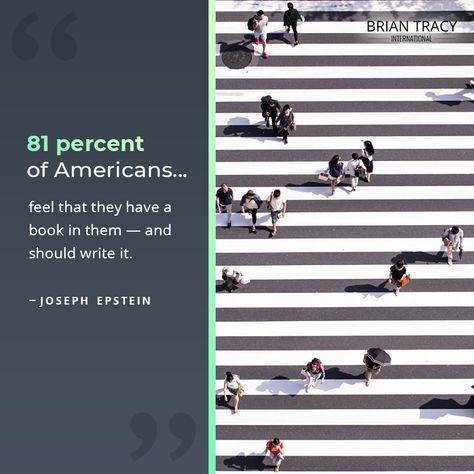
All novels start out as ideas, but not all ideas turn into novels. In fact, the sheer number of people who claim to have “a novel in them” is evidence that coming up with ideas is the easy part. Coming up with good ideas is the next step, and significantly more difficult.

Once you’ve got the kernel of a story, the real challenge begins: turning that idea into a fluid, well-written novel. The most challenging part is the act of translation from concept to compelling manuscript.

Related: How to write a novel from scratch

What so often happens for writers, particularly those just starting out, is that they put their idea down on paper and stop there. They see the act of writing a novel as writing down the details of the plot from start to finish. Even the most exciting, inventive plot, however, will still be just an outline if it’s written without a storyteller’s finesse.

What are some of the main challenges about showing that make it so difficult for so many authors?

Showing requires subtlety. Perhaps the biggest challenge of showing is to be able to convey the facts and nuances of your novel through subtle actions, descriptions, and dialogue. The other challenges outlined below all contribute to the overarching issue of subtlety.

Showing requires unbridled creativity. If you want to be subtle, you’ll need to be creative. A creative premise for your novel is one thing, but the true creativity comes when it’s time to put the pieces of your outline together in a way that hooks a reader and pulls them along to the last word.

Showing requires human understanding. Much of the art of showing has a foundation in human psychology. As a writer, you need to understand your characters better than anyone else—how they act, react, gesture, and speak. A realistic character isn’t an easy thing to conjure up, but a believable cast will make all the difference when it comes to showing.

Showing requires a diverse vocabulary. We’re not saying you need to use multi-syllabic words in every sentence, but you do need to have a vocabulary broad enough that you can convey the subtleties needed for strong showing in your writing.

Showing requires the ability to self-edit. The book editing process is vital for a number of reasons, one of which is the chance to eliminate some of the telling you may have done without realizing it. Heads up: This may mean “killing your darlings”—eliminating some of the passages of your novel that you love most dearly.

Showing requires trust in the audience. Often, authors end up over-telling because they are afraid their audience won’t understand what they are trying to say. While clarity is certainly important in any novel, a good writer must walk the tightrope between over-explaining and giving away just enough.

Showing requires practice. A lot of practice. No one is born a perfect writer, and nearly every major author who has dispensed writing advice has said something along these lines: If you want to succeed, you have to spend a lot of time writing.

The Little Red Riding Hood showing vs. telling example

Let’s look at another example of showing vs. telling, this time using a familiar story: Little Red Riding Hood.

Given that the story is a fairy-tale, most of the versions we know well are very much about telling, and not showing. In other words, it’s a simple story that’s usually pretty scant on details. For example, if you were to explain this story to someone who had never heard it before, you might say it like this:

Little Red Riding Hood was a young girl who decided to pay her grandmother a visit. On her way to her grandmother’s house, while passing through the woods, she encountered a big, bad wolf who tried to eat her. She ran off, but he was faster and got to her grandmother’s house first, where he promptly ate the old woman and dressed in her clothing. When Red arrived with her basket of treats for grandma, she saw the wolf and was immediately suspicious.

“My, what big eyes you have,” she said.

“The better to see you with, my dear,” the wolf said.

Red proceeded to make a few more comments about the size of the wolf’s ears, nose, mouth, and finally…

“Grandma, what big teeth you have!” Red said, feeling scared.

“The better to eat you with, my dear!”

The wolf grabbed Red and ate her.

A little later, a woodsman showed up at grandma’s house. He came inside and saw the wolf in grandma’s clothing, but saw through her disguise right away. He went over to the wolf and used his axe to cut open his stomach and pull Red out, safe and sound.

In this version of Little Red Riding Hood, you are only giving the details absolutely necessary to tell the story from start to finish. Remember the old police-movie phrase, “Just the facts, ma’am”? That’s a phrase you want to keep in mind when you’re writing, because if you’re just giving the facts and nothing else, you’re not showing a story—you’re providing a summary.

To bring the reader into the story, it’s important to include lots of details to draw a clearer picture. We won’t retell the whole story, but let’s start with one of the most exciting moments, when Red is examining her “grandmother.”

Imagine, instead, if an author wrote the story like this:

Red stepped over the threshold of her grandmother’s small cabin. Something smelled off—had Grandma left the eggs out on the counter again? Red wrinkled her nose. No, it wasn’t eggs; the smell was wilder and more gamey than that. Red clutched the basket tighter in her hands, feeling the wicker press into her fingers.

She looked over to her grandmother’s bed, and her stomach flipped. Grandma looked worse than she remembered. The old woman was wearing her favorite floral cap and matching gown, but the cap was pulled down so low that Red could barely make out her face. From the sides of her cap protruded two long ears, covered with wiry black and gray hair. Her ears stood straight up, pressing in the sides of the cloth cap and twitching slightly as Red spoke.

“Grandma… your ears. Are you all right?”

In the second version, we get many more details—we know how the cabin smells, what the basket feels like, what Grandma is wearing, what the wolf’s ears look like, and even a bit of history about Grandma’s tendency to leave out groceries. All of these details were absent from the “just the facts, ma’am,” version of the story.

It’s not just about drawing a clearer picture for the reader, but also providing subtle hints to the reader about our characters’ feelings and thoughts. In the first version of the above example, we are told that Red is “feeling scared.” In the second version, we are shown that she is feeling scared, because we know that her stomach flips, and we see her clutch her basket tighter.

Examples of over-telling aren’t always so obvious. In fact, the issue is typically more subtle, which makes it harder to identify. Fortunately, there are some red flags you can look out for in your own writing, as well as in the feedback you receive.

How to spot showing vs. telling

Though many teachers, editors, and readers are familiar with the phrase “showing vs. telling,” not everyone will use that exact wording. The reason? Too much telling and not enough showing in your story manifests itself in many different ways. Over-telling can affect everything from the overall plot of your novel to the conversations your characters have.

Telling words to watch out for

When you know your own plot inside and out, it can be very difficult to spot the instances where you are leaning more on telling rather than showing. However, there are some words that frequently seem to pop up like weeds around telling passages.

If you know telling is an issue for your current manuscript, it might be worthwhile to use the “find” function to search for some of these words:

Clearly/Obviously

Example Sentence: Maisey flashed a wide grin at Ben, obviously finding his joke funny.

Why it’s telling: In this case, we have an example of “over-telling.” The writer has actually done an ok job showing us that Maisey found the joke funny—a wide grin is an expression that suggests she found his comment humoros. Everything that follows the comma is unnecessary. If something is truly obvious or clear, it probably doesn’t need to be spelled out for the audience. If you are using the word “clearly” or “obviously” to explain something that isn’t obvious or clear, then you should instead find a way to use a gesture, piece of dialogue, or something else to show the audience what you want to convey.

How to show it: Maisey flashed a wide grin at Ben.

Told/tell/tells

Example Sentence: I told Layla the truth about everything—even about her father’s true identity.

Why it’s telling: Not surprisingly, the verb “to tell” can be an indicator of too much telling. Sometimes, it’s necessary to summarize dialogue that isn’t vital to the plot or to recap information the reader already has. Other times, though, summarizing dialogue is a lazy way of “telling” something rather than showing a conversation. Let’s assume that in this instance, Layla hasn’t yet learned the identity of her father, and that this is a turning point for her character. It would be much more exciting and engaging for the reader to see the actual dialogue and watch the expressions on Layla’s face, rather than simply be told that the conversation happened.

How to show it: “Layla, I-I don’t know how to say this,” I said, looking her in the eyes, “but your father was the man behind the wheel that night.”

 “What are you saying?” Layla’s voice was suddenly high-pitched. Her mouth opened and closed a few times, but no words came out. She took a deep breath through her nose and let it out in a shaky exhale. “You’re joking, right?” 

Pretty Language

Example Sentence: Keith felt a wave of despair wash over him as he watched the key disappear into the water.

Why it’s telling: Sometimes telling likes to cloak itself in pretty language. This may not seem like an example of telling, because of the florid language—despair “washing over” the character—does paint a bit of a picture. However, the author is still coming out and telling us exactly how Keith felt, rather than giving us visual or internal clues. For example, Keith could let out a cry or whimper, or he could desperately reach forward to try to catch the key, or he could think to himself, Oh no! Any of these options would put more showing into this sentence.

How to show it: A pained whimper escaped Keith’s lips as the key disappeared below the murky water.


How to spot showing vs. telling in feedback

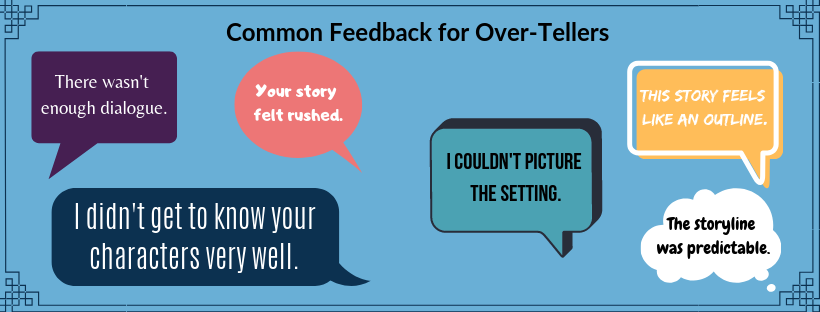
If you find it difficult to spot over-telling in your own work, it’s likely that your beta readers or editors can help you spot it. However, not everyone uses the term “showing vs. telling,” so criticism about this issue might show up under a different, harder-to-recognize moniker. Here are a few common types of comments you might see, and what they actually mean about showing vs. telling. (Don’t worry—our worksheets will show you how to address all of these issues.)

Showing vs. telling feedback | Invisible Ink Editing

The feedback: Your story felt rushed.

What it means: Telling is very much like summarizing, and summarizing is what we do when we want to tell a story quickly. So it makes sense that too much telling will make a plot feel rushed.

The feedback: I feel like I didn’t know your characters very well.

What it means: The amount of “telling” in your story has alienated your readers from the characters. Telling is inherently a shallow way to tell a story, and it can make characters feel shallow as well.

The feedback: I couldn’t picture the setting.

What it means: Similar to above, the over-telling in the manuscript left out the vital descriptions and details that create a realistic setting.

The feedback: The storyline was predictable.

What it means: Too much telling can make readers feel like you’re hitting them over the head with the main plot points of your novel. Showing, on the other hand, uses subtle hints to lead readers through your story, keeping them hooked on wanting to figure out the plot on their own.

The feedback: There wasn’t enough dialogue.

What it means: If your novel has summarized conversations, rather than the actual dialogue, that means you are relying on “telling” the reader what your characters are talking about, rather than letting them speak for themselves.

The feedback: Your story feels like an outline.

What it means: This one is a no-brainer. “Telling” a story is basically like outlining it for the reader. If you see this, you know it’s definitely time to work on your “showing” skills.

If any of this feedback sounds familiar, or you think you might be too prone to telling and want to get better at showing, you’re in luck. Our team of editors is currently working on a number of showing vs. telling worksheets that will give you prompts and guides to improve your own showing skills. Check back soon, or follow us on Twitter or Facebook for updates!

Categories
Resources for Authors Writing Advice

Invisible Ink’s list of the best books of 2018 | fiction

Somehow, 2018 has come to a close. Over the course of last year, our team of six book editors managed to read nearly three million words from our clients! Despite all of that time delving into our clients’ novels, we managed to squeeze in a few more words during our free hours. (We know we’re addicted to reading!)

We’ve put together a list of the best fiction novels we read this year—and we want to make a very clear disclaimer here that none of the books on this list were written by Invisible Ink clients.

Below, you’ll find a list of 2018 book recommendations from our editing team, along with a brief synopsis, a review of why we loved it, and what we think our clients might be able to learn if they read it themselves. That’s not to say that every book here was released in 2018; rather, these are the books we happened to pick up between January and December.

So without further ado…

The best books of 2018 | fiction

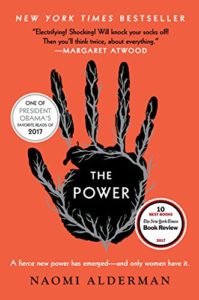
The Power, by Naomi Alderman

The Power | Natalie Alderman | Invisible Ink EditingSummary: The Power chronicles an enormous shift in the balance of power on planet Earth, when almost all women simultaneously gain the ability to deliver massive shocks of electricity simply through touch. Suddenly, women are easily able to overpower men, and the tables turn on everyone from sex-traffickers to sultans. The book follows four primary characters during this moment: Eve, a rising religious figure; Roxy, the daughter of a British mob boss; Margot, an aspiring American politician; and Tunde, a sly male journalist watching events unfold through his camera lens.

Why aspiring writers should read it: We frequently remind our clients of the importance of transporting readers to a different world. Alderman is a master of this difficult practice, because she is a master of subtlety. While the changes happening in the world are incredibly explosive, Alderman gives the reader even more hints about the changes in the world through small bits of dialogue and interaction.

Amazon | Goodreads | Author Page

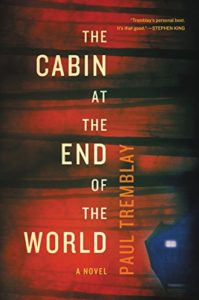
The Cabin at the End of the World, by Paul Tremblay

Cabin at the end of the world | Paul Tremblay | Invisible Ink EditingSummary: If there is anything more terrifying than renting a run-down cabin for your vacation, it’s having that vacation interrupted by four people, armed with rudimentary weapons, claiming that the end of the world is coming. This is the basic premise for Tremblay’s harrowing horror novel, which Stephen King himself called terrifying. Andrew and Eric, along with their adopted young daughter, Wren, are vacationing in the titular cabin in a remote part of New Hampshire’s White Mountains when this exact scenario plays out. With no wireless signal and the phone lines cut, the family has no way of knowing whether the four strangers terrorizing their vacation home are a group of crazed cultists or actual harbingers of the apocalypse. 

Why aspiring writers should read it: The entire novel contains only one setting (the cabin) and seven characters (three family members and four intruders). Tremblay’s novel is extremely restrictive, and yet every character in the book feels realistic and unique. The setting itself is wonderfully described, so much so that the reader also feels trapped in the cabin of horrors. If you are working with such restrictions, or you simply want to know what a fantastic modern horror story looks like, this one is for you.

Amazon | Goodreads | Author Page

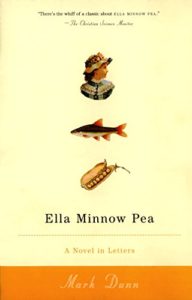
Ella Minnow Pea, by Mark Dunn

Ella Minnow Pea | Mark Dunn | Invisible Ink EditingSummary: This novel, told entirely through letters written by various characters, takes place on the fictitious island of Nollop, off the coast of South Carolina. The residents of Nollop revere their namesake, Nevin Nollop, the creator of the pangram (a sentence that contains every letter of the alphabet). A statue in the center of town features his well-known pangram: “The quick brown fox jumps over the lazy dog.” When letters on the statue begin to fall off, the quietly tyrannical leaders of the town determine that those fallen letters should be banned. As you read the novel, the letters that make up the book’s text begin to vanish, and the characters have to come up with more and more creative ways to use their diminished alphabet. The novel is not only an excellent example of constrained writing, but also a fascinating tale of small-town dogma run amok.  

Why aspiring writers should read it: If you want to try your hand at constrained writing, Dunn’s novel expertly demonstrates how it can be done. Even without the vanishing alphabet, the fact that he’s written a novel using only correspondences will give you a good idea of how you can break away from traditional formats while still telling a compelling story.

Amazon | Goodreads

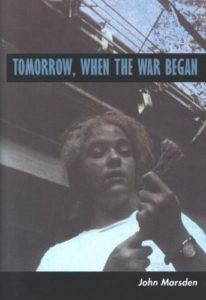
Tomorrow, When the War Began, by John Marsden

Tomorrow, When the War Began | John Marsden | Invisible Ink EditingSummary: Though Liam, our chief editor, is an American by birth, he’s been living in Australia for five years now. He’s still learning new things about the sometimes strange and usually beautiful culture there, and this book was a part of that effort. Tomorrow, When the War Began is the book that most high school students in Australia read, and lucky for them, it’s a good one. It’s the first book in a series about a group of Australian teens living through an unexpected war on their home soil. They happen to be out camping in the bush (aka rural wilderness) when an unnamed country invades. The group soon begins to fight back, staging guerrilla warfare efforts against their invaders—and they experience all of the consequences that come with that sort of violence and fear.

Why aspiring writers should read it: Many of our clients dabble in young adult literature, and while it may seem as though it should be easier to target a younger audience, it’s not so easy to write for teens without coming off as condescending. Marsden does a fantastic job of portraying teenagers in a sophisticated, non-stereotypical way, giving them very unique personalities. The main character, Ellie, who tells the story via her journal entries, is incredibly intelligent, but still has some of the insecurities that come with being a teenager. In short, this is a great novel to read if you want to know how to write well for a more youthful readership.

Amazon | Goodreads | Author Page

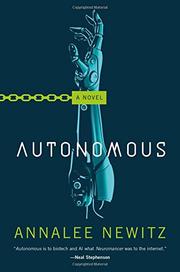
Autonomous, by Annalee Newitz


Autonomous by Analaee NewitzSummary: Jack is a patent pirate living a submarine, reverse engineering medications and doling them out to the general population as a strange rendition of Robin Hood. Eliasz is a young, hotheaded military agent trying to track down Jack after one of her reverse-engineered drugs, known as Zacuity, causes its users to literally work themselves to death. Each of these two protagonists travels with unique companions: on Jack’s team is ThreeZed, a former indentured servant turned rebel; Eliasz travels with a military robot named Paladin who is slowly, excruciatingly learning about the book’s central theme—autonomy. In and amongst this, Newitz brings her readers through a world ravaged by climate change, where most people live in the far north or under enormous air-conditioned domes. The line between human and robot is extremely blurred, and Autonomous also takes us on an in-depth exploration of such complex subjects as gender, free will, and capitalism.

Why aspiring writers should read it: Newitz juggles four main characters in one novel, with a large cast of supporting characters, and yet each of them feels unique, authentic, and likeable. She even gives us their backstories piece by piece through the novel, without hitting the reader over the head with exposition. If your novel has a large cast, this book could be a great inspiration.

Amazon | Goodreads | Author Page

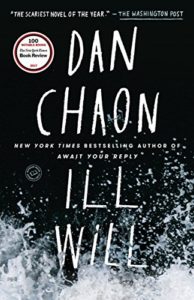
Ill Will, by Dan Chaon

Ill Will | Dan Chaon | Invisible Ink EditingSummary: College-aged boys in midwestern towns keep washing up in lakes and rivers. Is collegiate binge drinking to blame, or something more sinister? Ill Will explores two crimes: these modern-day drownings, and a quadruple homicide decades ago that orphaned our protagonist, Dustin. Now as an adult, Dustin is coping with (among other things), the recent death of his wife, the alienation of his two sons, and a creepy patient who is obsessed with the drownings. The Washington Post called Ill Will the scariest novel of the year (apparently they didn’t read Cabin at the End of the World). While it does have plenty of horror to go around, there is also a deep, unrelenting sadness that hangs heavy over Chaon’s beautiful language.
Why aspiring writers should read it: This is the closest we get to a mystery novel on our list, but it’s a compelling one. Writers can learn from the way Chaon drip-feeds information and uses his multiple unreliable narrators to make the reader question their own sanity.

Amazon | Goodreads | Author Page

Borne, by Jeff Vandermeer

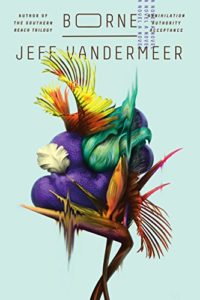
Borne | Jeff Vandermeer | Invisible Ink EditingSummary: Where to begin with Jeff Vandermeer’s incredibly strange and evocative novel, Borne? This is by far the most peculiar book Liam read this year, thanks primarily to the novel’s setting and premise. The book takes place years after a massive destructive force has changed Earth into a low-population wasteland, but it’s not like any post-apocalyptic world we’ve encountered before in in fiction. Vandermeer’s world is populated by such things as alcoholic sardines, children with giant wings, enormous and destructive flying bears, and the books titular creature, Borne, which is… well, you need to read the book to truly understand. Borne is a sentient creature, certainly, but it has an amorphous shape and seems to prefer its sense of taste over all other senses. Early in the novel, the protagonist, a scavenger named Rachel, finds Borne and develops an unsettling mother/child relationship with him. As time goes on, Rachel discovers disturbing aspects of Borne’s behavior, but her obsession leads them both down a very dark path.

Why aspiring writers should read it: Writing strong description isn’t easy, and it’s especially difficult when you have creatures and settings that are truly out-of-this-world. Vandermeer rises to the challenge, and any aspiring writer could learn a thing or two about how to describe the indescribable by reading this book.

Amazon | Goodreads | Author Page

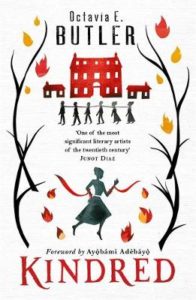
Kindred, by Octavia Butler

Kindred by Octavia ButlerSummary: In Kindred, Dana, a black woman living in California in the 1970s, suddenly finds herself transported back in time to a plantation in pre-Civil War Maryland. She is only there briefly—long enough to save a little boy from drowning in a river—before she is pulled back to her current day. Then, only a few hours later, she is pulled back in time again, to save the same boy, who is now several years older. This happens again and again, until Dana is spending more time living as a slave on a plantation than as a successful writer in California. She endures intense horrors while working as a slave, and though the book is forty years old, it’s a powerful read given the current political climate. Though it’s a departure from the tentacles and vampires that typically feature in Butler’s incredible novels, it still has her signature straightforward storytelling and characters that make your heart ache.

Why aspiring writers should read it: If you want to write good Sci-Fi, then you need to read good Sci-Fi—which means you should rent, buy, or download every word written by Octavia Butler. Kindred is her highest-praised novel, and for good reason. This novel can teach you a lot—how to write historical fiction with accuracy, how to convey the first person effectively, and how to create loveable characters and put them through hell (which is an important and painful skill to learn if you want to master horror).

Amazon | Goodreads | Author Page

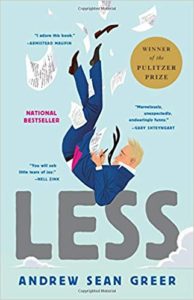
Less, by Andrew Sean Greer

Summary: Less is a satirical comedy-romance about a gay writer, Arthur Less, who sets out on a frivolous literary world tour, mostly as an excuse to skip the wedding of his ex-partner. Arthur Less is in the midst of turmoil as his fiftieth birthday approaches and as he tries to come to terms with his failed love life and mediocre writing career.  Part mid-life coming-of-age story, part travel fiction, Less is a unique book that paints relationships, love, and loss with a masterful hand.

Why aspiring writers should read it: In addition to being a New York Times bestseller and Notable Book of 2017, Less won the 2018 Pulitzer Prize as well as the Northern California Book Award. For anyone who wants to write a great novel, it only make sense to read books that earned such top honors. As Ursula le Guin once said, “It was Borges and Calvino who made me think, ‘Hey, look at what they’re doing! Can I do that?’”  Less does a few things extremely well. It breathes life into a remarkably lovable character, it stays light and funny while dealing with themes of depression and heartbreak, and most of all, it plays with a reflective structure that frames the narrative while it also deepens the characterization of Arthur Less and all the people he cares about.

Amazon | Goodreads | Author Page

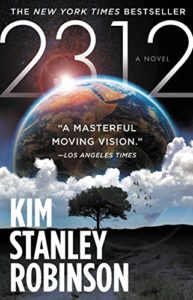
2312, by Kim Stanley Robinson

2312 | Kim Stanley Robinson | Invisible Ink EditingSummary: It’s 2312. Mercury, Venus, Mars, and even the insides of cored-out asteroids have been transformed into incredible terraformed habitats. Swan Hong, an artist and expert terrarium designer, is pulled into a conspiracy that seems to pit the inhabitants of Earth against everyone living in space. After the Mercury colony is nearly destroyed, Swan must disentangle a mystery that threatens to jeopardize the stability of the entire solar system.

Why aspiring writers should read it: 2312 won the Nebula Award for best novel. That’s not to say every Nebula winner is solid gold. We have definitely come across some titles in this list that aren’t exactly mind-blowing (Ancillary Justice, ahem). However, 2312 stands out for a number of reasons. First of all, the book is full of interesting characters, breathtaking worlds, and sentence-level poetry. But perhaps more than that, every aspect of the near-future seems to have been considered, in terms of technology, bio-engineering, terraforming, as well as humanity’s social evolution. Through characters with physical modifications and extended age, Robinson explores ideas around the personal, interpersonal, and social impacts of enhanced longevity. Many “high concept” science fiction novels focus on one aspect of future tech and its implications for our descendants. In contrast, 2312 offers such a scope of future possibilities, it reads like a prescient glimpse into the next era for humanity.

Amazon | Goodreads | Author Page

Categories
Resources for Authors Self Publishing Advice Writing Advice

How to find a book editor for your manuscript

For first-time authors, finding a book editor can be nerve-racking. It takes a lot of courage to show your work to someone else—especially someone you don’t know personally. However, finding the right editor can make the difference between a book that sells well and gains a wide audience and one that flops before it even makes it to market.

For full transparency, Invisible Ink Editing is a group of book editors, so of course we would recommend submitting your manuscript to us for review. We also know that a good editor-author relationship is vital to your success, and if we feel you may be better suited for a different type of editor, we will tell you right away.

We’ve outlined a few questions you can ask as you try to find an editor for your novel, whether you find the best book editor at Invisible Ink or elsewhere.

What type of book editor do you need?

The first question you want to ask is, “What type of book editor do I need?” Consider the type of manuscript you have written; many editors specialize in certain types of writing. For example, Invisible Ink Editing is primarily a fiction editing group. Other editors may focus on nonfiction, and as such, have a fact-checking process beyond that of a fiction editor. You’ll also find editors who work in specific genres—there are sci-fi editors, romance editors, young adult editors, and so on. (We take all genres at Invisible Ink, in case you’re wondering.)

You also need to consider what level of manuscript editing services you need. If your book has already been edited and just needs a sweep for typos and minor grammatical mistakes, then you will need to find a copy editor or proofreader. If you need help developing your novel’s plot, characters, and other big-picture details, you’d be better suited for a developmental edit. If you aren’t sure what you need yet, a good editor will be able to advise you after reviewing a sample of your work.

Key questions to ask your book editor

Once you know what type of editing you’re after, you can start to narrow down your search for the perfect book editor. There are several questions you should ask any potential editors you’re vetting. Most editors have a website or portfolio they’d be happy to share, which may contain much of this information. Here are a few questions you might want to ask at the start:

  • What sort of experience do you have? Some freelance book editors come with decades of experience, while others are just starting out. Although there’s no harm in going with a new-on-the-scene editor if you feel they’re a good fit, it’s probably best to make sure your book editor has edited at least two or three other novels, preferably ones similar to yours.
  • What certifications/training do you have? Not all editors are certified, but those who are will be happy to share the details. Many independent book editors in the US are part of the Editorial Freelance Association (EFA) or another professional organization. Others will have attended a university, college, or graduate school and received a relevant degree. Still other book editors may not have any formal certifications—this isn’t necessarily a red flag, as they may have work experience or informal training where they’ve developed their editing skills. If they seem like they’d be a good fit, you can always ask for a sample edit as well as a testimonial.
  • What editing standards do you follow? Your editor should be able to tell you the basic standards they use for editing. In the US, this is commonly the Chicago Manual of Style, a popular guide among fiction editors. Most book editors will also have a preferred dictionary as well. (For us, it’s Merriam-Webster).
  • Can you tell me more about your editing process? A good editor is an organized editor. Though your potential book editor may be working on several projects at once, they should still have a formal process they use to make sure their work is done clearly, consistently, and on time.
  • Have you ever edited a book in my genre? Similar to the first question about experience, it’s a good idea to gauge whether your editor has worked on books in your genre before. Many editors specialize in particular genres, and if you’re focused on marketing your book to a specific subset of readers, then an editor who knows your genre well is an asset.

The importance of a sample book edit

Many editors offer a free sample edit of your manuscript before they take you on as a client. Though the number of words they’ll edit varies (at Invisible Ink we do around 750 words), and some editors may charge a small fee, sample editing is commonly offered within the industry.

A sample edit allows you to see what kinds of changes the editor would make and how they tend to communicate feedback. It also gives your editor a chance to get to know your writing style and assess your manuscript, which helps them determine a quote and turnaround time if the project is accepted.

Go with your gut

At the end of the day, the only person who will know when you’ve found the right book editor is you. You know your own work better than anyone else ever could, so let your instincts guide you to the best book editor for you. You can learn a lot about your editor through the way they communicate and how they treat you as a potential client. It’s always a good idea to shop around and weigh your options, but once you think you’ve found the right book editor, then it’s time to make your move.

Still looking for the perfect book editor for your novel? Get in touch with Invisible Ink.

Categories
Resources for Authors Self Publishing Advice

Publishing tips for indie authors: Setting a book launch date

We asked indie author and publisher Nelson Suit to answer a question we often see from our authors. Nelson is editor of the e-journal Inkspokes.com, which showcases authors, illustrators, and other creatives working in the world of independent children’s publishing.

Q.: How do I choose a release date for my novel? Setting dates often increases stress for me, and I am afraid I’ll miss my own deadlines. Any tips?

  A.: Since you are choosing the release date for your novel, I’ll assume you’ve decided to independently publish your book. Congratulations, by the way, for not only taking on the task of writing but also the challenge of publishing. For us as indie publishers, choosing a book launch date is a really exciting part of the publishing process. It’s the first bit of planning for the coming-out party for your book! It’s important to understand though that you’ve now taken on two roles. Even as your novel writing comes to an end, thinking about the release date (your ever-exciting book launch) means your publishing role has now come to the fore. book launch advice There are a couple things that might be said about setting book launch dates. First, when setting such a date, it makes sense to think like a traditional publisher. But, second, as an indie, you should also not be afraid to think like yourself. Here’s what I mean. There are many resources both online and otherwise on setting a timeline for a book launch that looks at what large publishers do. One of the first considerations might be whether you want to have your book launch tied in to a particular window or season within the retail calendar. For example, a lot of books are sold in November and December during the year-end holidays. So a book might have to be released by Halloween so that there is buzz leading into this busy buying season. Or some books might tie in to summer beach reading, or a self-help book might tie in to January sales as readers attend to their New Year resolutions. Consulting editor Alan Rinzler has a terrific post on his blog about seasonal tie-ins for book launches. Another important consideration traditional publishers look at is really just time—how much time do you need to have your novel ready for launch? And this timeline encompasses more than just having a book printed. If you wanted to do all the recommended items (as a publisher might), you might have a timeline that might run eight to twelve months from the time you substantially finish your manuscript. Why such a long lead time? There’s a long list of tasks to consider, but to name a few:
  • Beta reading
  • Novel editing
  • Book cover design
  • Illustrations (if you will have any)
  • Book design and layout
  • Proofreading
  • Connecting with your super-fans who may be able to spread the word about your new book
  • Preparing marketing materials (including your back-cover blurb)
  • Developing and executing a social media plan for the release
  • Identifying early reviewers and people who might endorse your book with a quote
  • Contacting local media sources to publicize your book release
The list goes on, and Joel Friedlander has a helpful checklist to look through as you think about how much time you will actually need. It is, of course, easy to be overwhelmed as you look at the checklist, but don’t be. That’s where my second thought on the topic comes in. This is your book. You are also the publisher, and so, while you consider all the things you might do, you decide how much time you need and which tasks you will do without. You can add in creative alternatives to what others have done that work better with your temperament. You decide what tie-ins you would like based on what you know about your book and your own schedule. The good thing about being indie is that you can be you as you go about this process. Truth to tell, we’ve done what many indie authors and publishers do, which is to hurry the process and skip more book launch tasks than we should—which, of course, we end up regretting. Books, like babies, are only born once (well, at least first edition books!), and you realize later what a unique opportunity a book launch really is to generate exposure for your new creation. Tailor the timeline to what is comfortable for you. Make it your own. Make it fun. Create special days in it for silliness and time off. That in turn might help with the stress. It’s not an easy process. Both writing and publishing take dedication and a lot of time, but you can also make it your own. In addition to editing Inkspokes.com, Nelson manages Inkspokes Media, an independent publisher, and is on the board of directors of the Independent Publishers of New England. Nelson Suit has written his own middle grade children’s book series and has spent many days and nights thinking about books, book making, and publishing. He loves handmade books and is ever curious about what other indie authors and publishers are doing (because they are mostly fun, creative, and more often than not, crazy passionate about what they do). You can connect with Nelson Suit on Facebook and Twitter (@inkspokes).