Categories
Self Publishing Advice Writing Advice

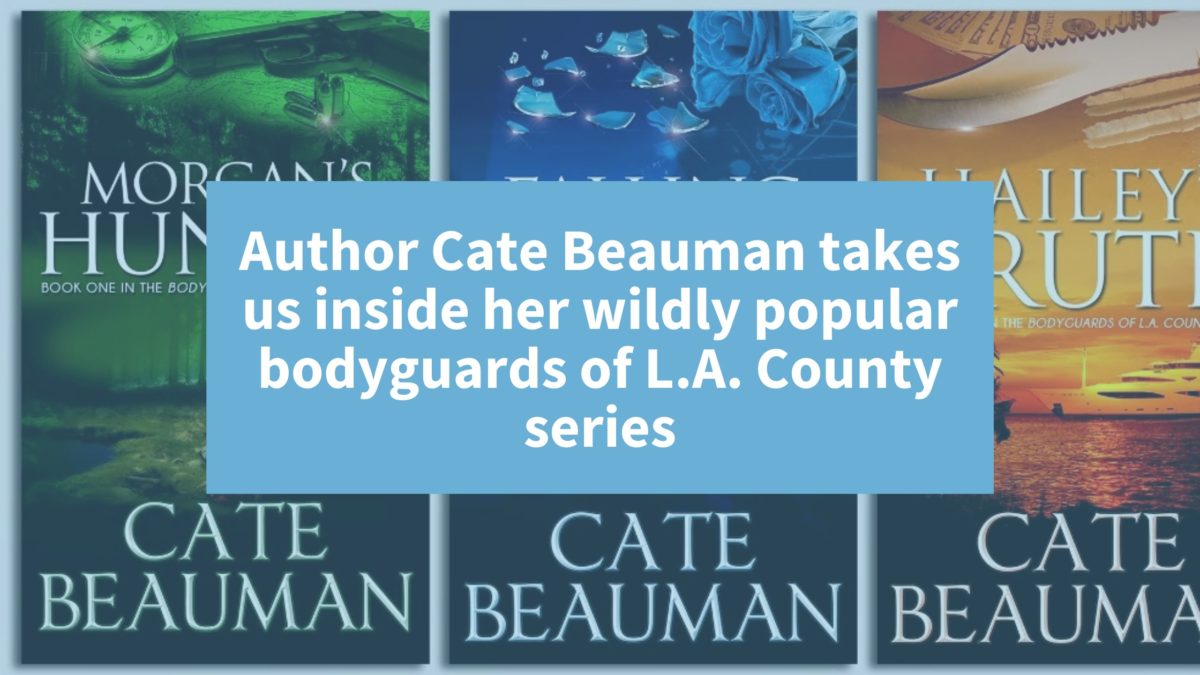
Author Cate Beauman takes us inside her wildly popular Bodyguards of L.A. County series

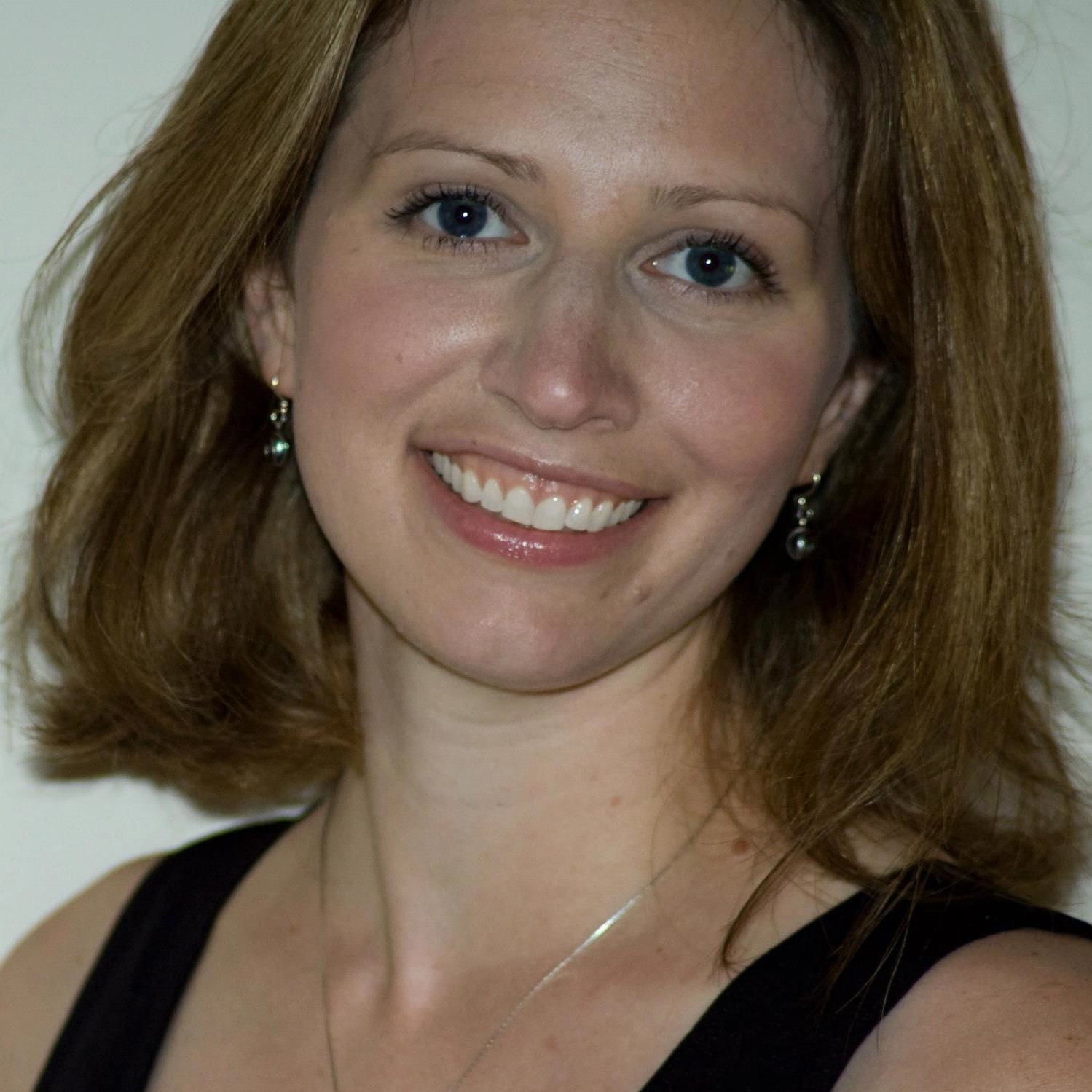
cate head shot

Cate Beauman fell into writing more than she dreamed of it. “Writing novels never made my bucket list,” she says. “One day I picked up a pad of paper and scribbled down the thoughts in my head. Next thing I knew, I had over 100,000 words. I’ve been obsessed ever since; now I can’t imagine doing anything else.”

A former New England resident, Cate now makes her home in North Carolina with her husband, two boys, and their St. Bernards, Bear and Jack.

Cate is currently working on Reagan’s Redemption, the eighth novel in her best-selling romantic suspense series, The Bodyguards Of L.A. County.

For information on new releases, monthly giveaways, and upcoming events, sign up for Cate’s newsletter. Cate can be reached on her website, www.catebeauman.com, or on her Facebook page. You can follow Cate on Twitter @CateBeauman.

Tell us how you originally got the idea for the Bodyguards of L.A. County series.

I never planned to write a series. The thought never occurred to me as I wrote Morgan’s Hunter, the first novel in the series—and really, my first work as a serious writer. I was simply telling the story of a bodyguard who was protecting his feisty principal in the backwoods of Montana. But then I introduced Ethan and Sarah to the plot. As the manuscript started to unfold I became very intrigued with the idea of giving Ethan and Sarah a story of their own. Not long after finishing Morgan’s Hunter, I wrote Falling for Sarah, which was supposed to complete a two-book series. Then Austin and Hailey were added to the storyline, and I realized I had a series on my hands. The rest, you could say, is history!

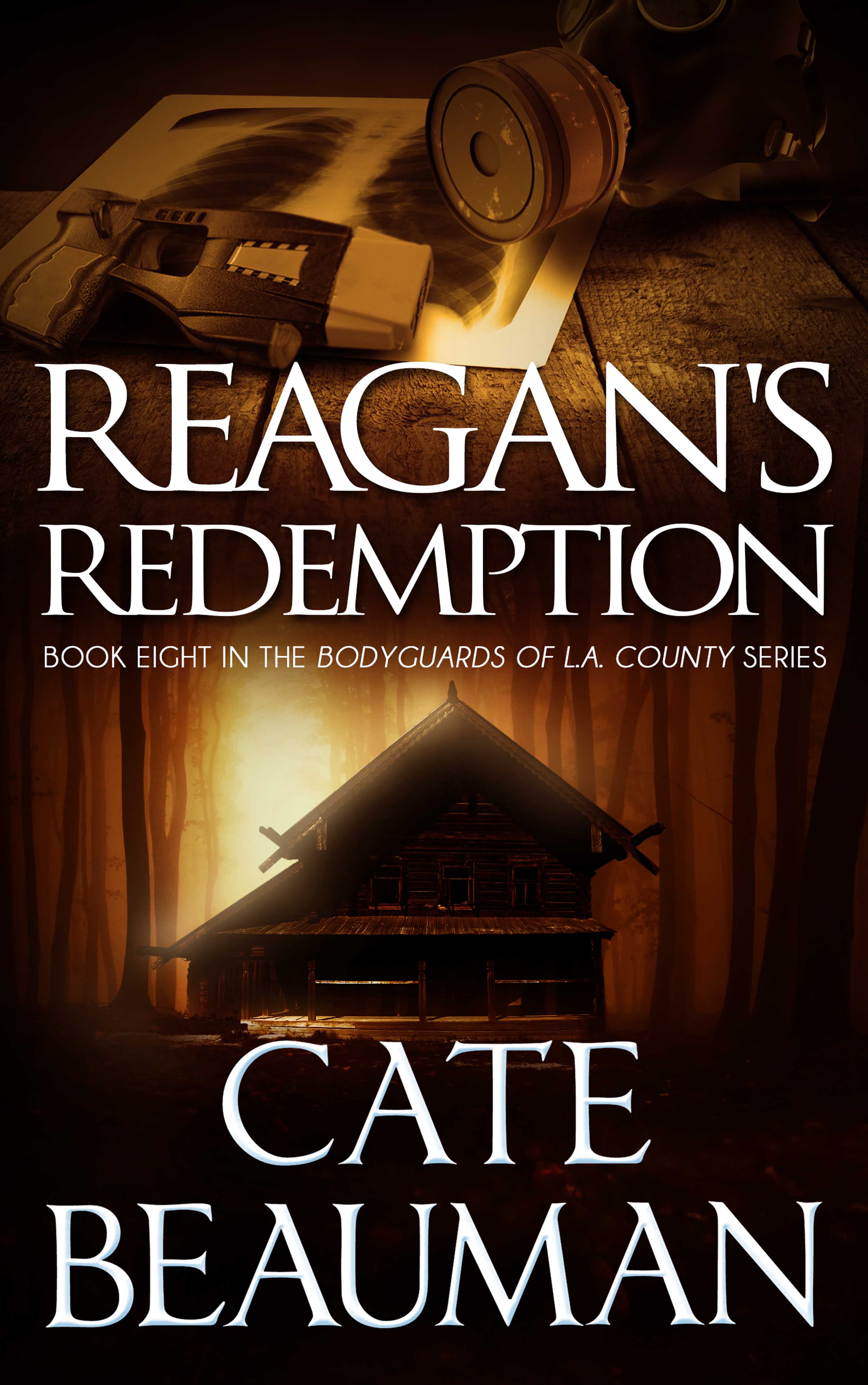
Tell us about your upcoming book, Reagan’s Redemption. Who will we meet in this novel? What kind of excitement can we expect?Reagan's Redemption - Ebook

Reagan’s Redemption is the story of Doctor Reagan Rosner and her bodyguard, Shane Harper. Reagan is at a crossroads in her life after a heartbreaking and unexpected tragedy. Unsure of what to do, she joins The Appalachia Project, a government-run program aimed at bringing aid to some of America’s poorest citizens.

Shane Harper is assigned to keep an eye on Reagan and the pharmaceuticals they have on hand in the odd and often hostile little town of Black Bear Gap.

As Reagan and Shane work together to help a reluctant community, they uncover secrets the town intends to keep hidden at all costs.

You are a master at balancing both romance and suspense in your novels. How do you make sure you give your readers a healthy dose of both, without crossing any lines?

That’s a tricky question. Honestly, I’m not exactly sure how I do it. I love romantic suspense. I’ve read the genre for years, so I think I try hard to give my readers what I would want. Romance always plays the central theme in my stories, but sprinkling in elements of danger really adds something special. Love and romance are hard enough, but when the characters’ lives are in peril and the odds stacked against them, it heightens the entire experience. I love weaving the two together.

What sort of lessons do you hope your readers take away from your novels?

I don’t typically write with messages for my readers. Basically, reality bites sometimes and I love to give my readers a place where they can go and get lost in someone else’s problems for a while. Mostly the stories I tell are for pure entertainment. I strive to make my characters flawed and relatable and their experiences exciting yet plausible.

You’re quite the prolific author. How do you keep coming up with fresh ideas on a similar theme?

I spend my time off watching lots and lots of crime television. When I find myself running low on ideas, I sit down with a pad of paper, turn on the television, and wait for a documentary or situation on a crime show to pique my interest. When I see something special my brain kicks into high gear and ideas just start flying. Sometimes I can see scenes for the new story I will tell in my head right then and there—one of the true gifts of an overactive imagination!

What is your editing process like?

Typically I write in a three-draft form. First draft is getting the ideas down in a loose story form. My second draft is when I get the story right by adding more of the emotive and physical descriptions, and the third is when I run my manuscript through a program called AutoCrit Editing Wizard. The program helps me find overused words, slow passages, so on and so forth so that when I send my work off to Liam at Invisible Ink Editing he’ll have as clean of a copy as I can give him.

What is your publishing process like?

I self-publish, so my publicist and I handle the workload ourselves. We do lots of blog tours and interviews. I also spend a lot of time with my Facebook fans on my author page getting them ready for the launch of each new story. I think that is one of my favorite parts of this whole journey—meeting and interacting with so many great people.

Do you have any advice for budding authors?

Never give up on your dreams. When I started out in this business I almost quit after the first editor I contacted told me I couldn’t write and I shouldn’t quit my day job. Luckily, I have a lot of really supportive people in my life who encouraged me to keep writing. I’m glad I did because telling stories is one of my biggest passions and has changed my life for the better. Write because you love it and the rest usually falls into place.

Last question—you are being pursued by thieves intent on stealing your latest manuscript. Which of the hunks from your book would you want to protect you?

Oh, wow. This is truly an impossible question to answer! All of the agents from Ethan Cooke Security are more than capable of keeping my manuscript and me safe, but they’re all so different and intriguing in their own ways. It’s kind of like asking which of your children do you love more. I love them both with the same power but their unique qualities are what make me adore them. How’s that for an answer?

Categories
Self Publishing Advice Writing Advice

A.D. Starrling, author of the smash series “Seventeen,” discusses her road to success

AD Starrling is the indie author of the

A.D. Starrling is the indie author of the award-winning and nominated supernatural thriller series Seventeen. She lives in England, where she spends her time writing fast-paced, action-packed thrillers, and juggling babies in the intensive care unit where she works as a part-time pediatrician.

Soul Meaning (Seventeen Book #1) and King’s Crusade (Seventeen Book #2) are currently available for sale in e-book format on Amazon, with the paperbacks scheduled for release in March and April 2014.

To find out more, contact her at:

rsz_emailTwitterrsz_email_adFACEBOOK

Or you can visit her website, subscribe to her newsletter, see her on Wattpad, or check out her U.S. Amazon page or U.K. Amazon page.

Your Seventeen series has seen some major success. It’s such a unique story; how did you come up with the idea?

The origin of Seventeen is a story in itself. Several years ago, I went to Mauritius on one of my biennial visits to see my family and ended up going on a day trip to a beautiful island off the mainland called Ile aux Cerfs. When our boat was traveling through the lagoon on the way back, it passed a small sandbank with mangrove trees. On it was a black marker stone bearing the number 17, written in red, dripping paint. It was a striking sight to say the least and one that stuck with me. When I decided to write something for the British Fantasy Society short story competition the next year, that image came to mind.

That short story made the top five of the BFS competition that year. But I wasn’t satisfied with it just being a short story. Lucas wanted to tell me more. So I listened and carried on writing.

What do you find is the hardest part about your writing process?

The constant fear that I might not be able to finish my current project. I’m sure most authors live with this fear. It
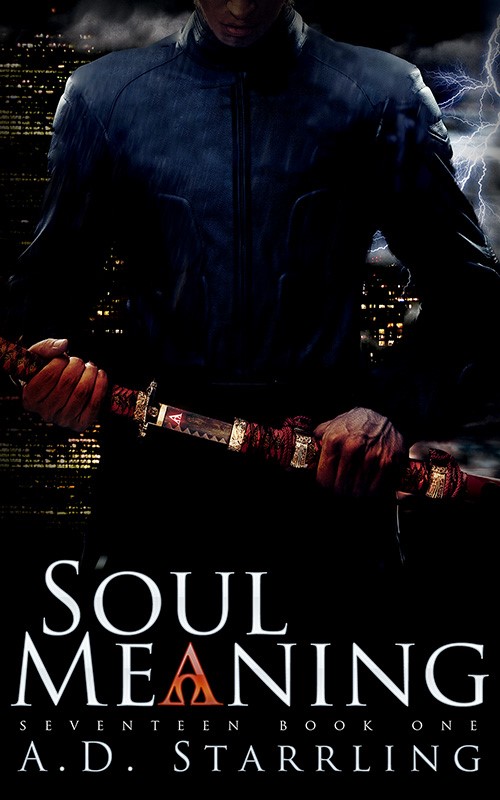
Sould Meaning, by AD Starrling

normally hits me about 15–25 percent into the book, then at about 50 percent. I call the latter the “middle of the book” syndrome. This is also the point when I start to wonder whether I’m writing a pile of poop.

Can you tell us a bit about your self-editing and proofreading process?

I edit as I write. Always have and very likely always will. I know of many authors who write the first draft as fast as they can, without any editing, and then spend a few months researching, rewriting, and polishing. Stephen King suggests this style of writing in his book On Writing. I don’t think I’ll ever be able to do that. I would not be able to write the next scene or chapter without going over the previous material.

The disadvantage of writing this way is that it takes a long time to produce that first draft. Writing full time, it can take me anywhere between three to five months to produce a 100–106–thousand word draft. The advantage is that the first draft would have gone through three or four edits by the time I submit it to my editors. The rewriting then tends to be short, a couple of weeks, three at the most, with the final proofreading taking another three to five days.

The best proofreading method I’ve discovered is to read the book out loud. Your ears don’t lie to you as much as your eyes do.

Who would you rather have by your side in a bar fight: Lucas, Alexa, or Conrad?

That’s a tough one. Lucas is strong and very special, as we see in the first book in the series. As the first immortal I created and by virtue of his abilities, logic dictates I should pick him. Alexa is the ultimate immortal warrior and the best fighter of the three of them. But she’s scary as hell. Yes, she even scares me, her creator. Conrad is a great fighter and a healer.

I’d have to go with Conrad. Considering I’m a klutz who can’t fight, it’d be great to have someone there to stop me from bleeding to death.

What sort of promotions do you do for your writing?

In the past, I have done blog tours and competitions, Goodreads giveaways, paid advertising on specific sites, KDP Select with free and paid advertising, and physical book launches.

This year, I will be doing Netgalley and Wattpad, as well as a few of the above. There is always a learning curve with what works and what doesn’t with promotions, and with the fast-changing pace of this industry, there will always be new things on the horizon.

If you had sixteen lives to live, what would you want to do?

  1. Travel the world and live in as many countries as I can over my many lives.
  2. Go back to university and do degrees in other subjects that interest me: literature, arts, languages, design, astrophysics…the list goes on!
  3. Conquer my fear of heights and deep water.
  4. Contribute something lasting and useful to human society.
  5. Do humanitarian work.
  6. Work to preserve endangered ecosystems and species.
  7. Become an athlete.
  8. Own my own island.
  9. Become a professional chef able to cook all the cuisines, from all the cultures of the world.
  10. Be a writer in all of my lives.

What’s next for your writing career?

I will be completing the series Seventeen in the next three years, with Book 3 scheduled for release late spring or early
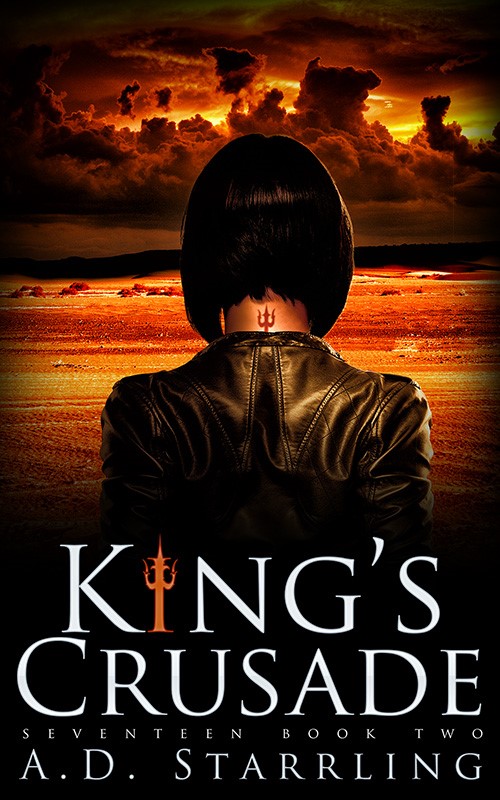
King's Crusade, by AD Starrling

summer 2014 and Book 4 currently in progress. I would like to secure an agent in the next year or so to look at what I can do with the rest of my rights, especially foreign translation, film, and other digital media, including gaming and comics. I have plenty of other projects to keep me busy over the years to come, including a long-term, lighthearted fantasy project that’s close to my heart that may yet see the light of day under another pseudonym.

Do you have any tips you’d like to share with other aspiring indie authors?

Do your homework before you embark on this path. Read and research as much about the self-publishing industry as you can. There are plenty of great writing blogs out there that provide information for self-published authors. I’ve listed a few of them at the end of the self-publishing article under the “Bonus” section of my website. You will find conflicting views and opinions as you read about this industry. That’s normal. Once you have publishing experience under your belt, you will figure out which opinions you agree with.

The publishing industry is in a state of flux, and many believe there has never been a greater time to be a writer. I agree. Don’t expect to know everything at once. You will make mistakes and decisions you will regret as you travel this path; learn from them and move on.

Be realistic about your goals. Why are you doing this? If it’s to get rich quick, don’t bother. If it’s to establish a writing career and be in it for the long haul, knowing that you may never make a living out of it, or if you do, that it may be many years away, then go for it.

Be professional. As a self-published writer, you are effectively setting up a new business. Grow a thick skin. You will get what you deem to be negative reviews. Learn from them if you can and move on. Don’t attack the reviewer unless he or she has done something completely unacceptable, in which case, open a polite channel of communication. Reviewers review the book; they should not bully or attack the author on a personal level. Most “negative” reviews are well expressed and bring something valuable to the author. Not everyone is going to like your book. That’s just life.

Before I embarked on this path, I read a few articles that said self-publishing is easy. Yes, it’s easy to press the upload button on Kindle Direct Publishing and have your book available for sale within less than twenty-four hours. It’s everything that comes before it that’s hard. It’s hard to write a good book, to make sure it’s been thoroughly edited and proofread, to have a good and appropriate cover for it, to have it formatted for an e-book and/or a print book, and, most importantly, to get people to buy it. That’s why I have a team. I have two editors, two proofreaders, several beta readers, a cover designer, and a formatter. If I do a blog tour, I outsource that to a reliable tour organizer. I’m lucky in that I have a good day job that can pay for these services. There are many authors who have learned to do all these things on their own. If you’ve got the time and wish to try your hand at these skills, do it.

But don’t put a poor-quality product out there and expect people to pay money for it just because you couldn’t afford to have the best editing, the best cover, and the best formatting. It has to be your best. Save up. Cut down on luxuries. Don’t take that holiday. You need to invest in any new business to gain from it long term, and you have to make many sacrifices along the way. Why should writing be any different?

And remember, you’re doing this because it’s your dream job. If you love it and enjoy it, it won’t feel like work most of the time. If you’re not enjoying it and you dread sitting down to it, rethink whether this is the right choice for you.
Categories
Writing Advice

Comments on commas and conjunctions

Here’s the thing about being a professional editor: You learn, over time, there are mistakes people make in their writing that are so minute, most people never notice them. But one of the joys of proofreading is finding these tiny errors and correcting them, even if it’s not something readers will pick up on. We want the novels that cross our desk to be absolutely spotless, which means hunting down these minute missteps and wiping them clean. So today I’d like to write about one of the most commonly overlooked grammatical issues we see during our book editing: comma splices. Commas are such tiny, wishy-washy little buggers, many people assume they can be used or omitted at will. Not so! There are some hard and fast comma rules, so let’s review the one that trips up even the cleverest of indie authors: Commas splices If you are using a conjunction to connect two clauses, do you need a comma? Sometimes you do, sometimes you don’t. You DO need a comma if the clauses are independent. Basically, if the clauses on either side of your conjunction both have a subject and and a verb, use a comma to separate them You DO NOT need comma if one of the clauses is dependent, meaning it borrows the subject from another clause. Here are some examples:
The monster enjoyed the taste of human flesh, but she had a heart of gold nonetheless. The villagers feared the monster and could not comprehend her soft side.
The first of these very true sentences needs a comma, because the conjunction (“but”) separates two independent clauses. The first clause has a subject and verb (“monster” and “enjoyed”), and the second also has a subject and verb (“she” and “had”). The second sentence does not need a comma, because the conjunction (“and”) separates two dependent clauses. The first clause has a subject and verb (“villagers” and “feared”), but the second only has a verb (“could”) and refers back to the subject from the first clause. Complex? Yes, but once you get the hang of it, it becomes second nature. Now, there’s one little word of warning: Be careful with “as”! Technically, it only acts as a subordinating conjunction when it’s being used as a synonym for “because,” not when it’s working as a synonym for “while.” So:
You should make me a cup of tea, as I’m dying of thirst.

vs.

You should make me a cup of tea as I work on my NaNoWriMo manuscript.
It might seem complicated, but it’s the stuff we professional novel editors thrive on!

—Liam Carnahan, Founder and Chief Editor of Invisible Ink Editing

Categories
Self Publishing Advice Writing Advice

Your indie novel is a (beautiful) gutter

It’s an ugly metaphor, but it’s one that makes sense to me as a professional editor. Think of your story as a gutter running along the side of a house. Making up that gutter is the meat of your story: plot, characterization, setting, style—everything. Your goal is to nab your reader and pull him or her through the gutter, not unlike the itsy bitsy spider. But your reader needs to make it smoothly from the opening of the gutter (your first page) to the spout at the end (your final page).

Readers must pass through your novel like water through a gutter.

Unfortunately, as anyone who’s spent time on a roof will tell you, gutters get clogged. Big clumps of muck block the passageway, making it impossible for water—your readers—to pass through unhindered.

When you sit down for a proofreading or editing session, you want to clear out all of the gunk until your gutters are clean enough to eat out of. Then you can focus on enhancing the most valuable parts of the story. It can be difficult, however, to see all that gunk when you’re so immersed in the narrative, and that’s why a second set of eyes is a crucial step in the editing process.

My fellow book editors and I spend much of our time identifying and eliminating the muck from manuscripts, particularly when we provide a literary edit. However, indie authors also need to be on the lookout for the gunk when reviewing their own pieces. So don’t be afraid to get on those rubber gloves and start cleaning those gutters, baby.

—Liam Carnahan, Founder and Chief Editor of Invisible Ink Editing