Categories
Self Publishing Advice Writing Advice

An author’s guide to the editing process

An author’s guide to the editing process

In the lifespan of a novel, it’s easy to think that editing comes at the end. 

In its most simplified form, you might map the process of writing a book like this: 

First, a writer has an idea. 

Then a writer writes several drafts. 

Then an editor revises the book. 

Then a publisher gets the book on shelves. 
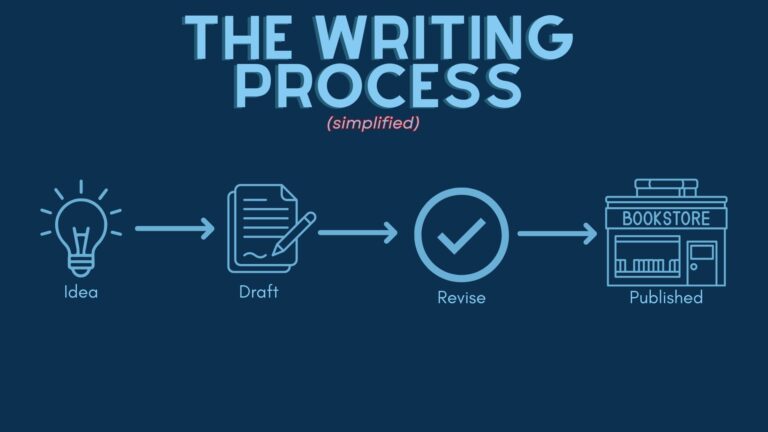
An image shows a four-step process under the words The Writing Process with idea, represented by a light bult, draft by a pen and paper, a check mark for edit, and then a book store icon for publish.

In reality, it’s a lot more complicated than that, because “editing” isn’t just one thing—there are many different kinds of editing, and they happen at different stages of the ideation, drafting, and revision process. The pathway to publication also plays a big role in how and when editing comes into play. 

The process looks more like this: 
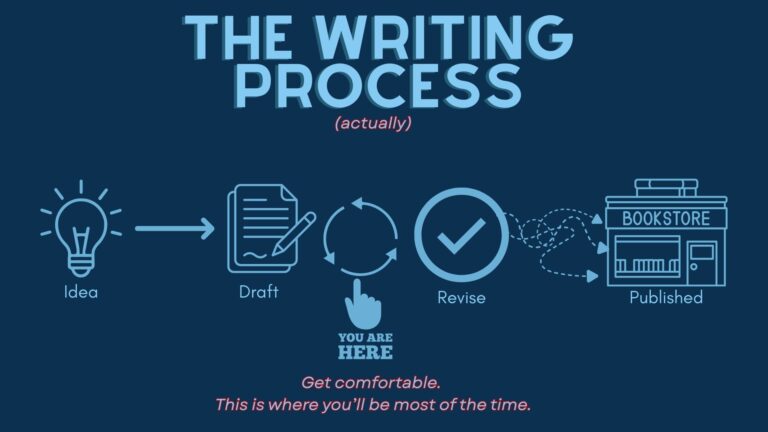
In other words, it’s complicated! But the revision and editing process is vital, and there is no pathway to successful publication without editing. 

With the right editor (or editors) in your corner, the whole process is easier to manage, and will help you grow and evolve as a writer. 

Invisible Ink has been collaborating with authors since 2012. We’ve broken down the entire editing process and answered the most-common questions we receive from authors entering the editing process for the first time. 

Revising vs. editing vs. drafting: What do these terms mean?

Before we get too far down the editing rabbit hole, let’s define a few key terms. These three words are often conflated, but in the editing and publishing world, they have distinct meanings: 

Revising and editing both refer to the process of going back over a piece of writing to refine and improve it. But these two words refer to slightly different approaches to this process: 

Revising is about big picture changes: plot adjustments, adding or changing characters, reworking the structure of your book, and so on. 

Editing has more to do with adjusting the text itself. Refining language, rewriting sections for more clarity, tightening the syntax, double-checking grammar. 

There is a lot of overlap between revising and editing, and even professional editors will sometimes use these two terms interchangeably. However, for authors, revising and editing require different mindsets and different relationships with professional editors—more on that later in this article.

Drafting is another related term that refers to the entire process of turning an idea into a manuscript. The drafts you create are a result of revision, and once you are done drafting, you’ll be ready to move into the editing stage. 

The art of self-revision and editing
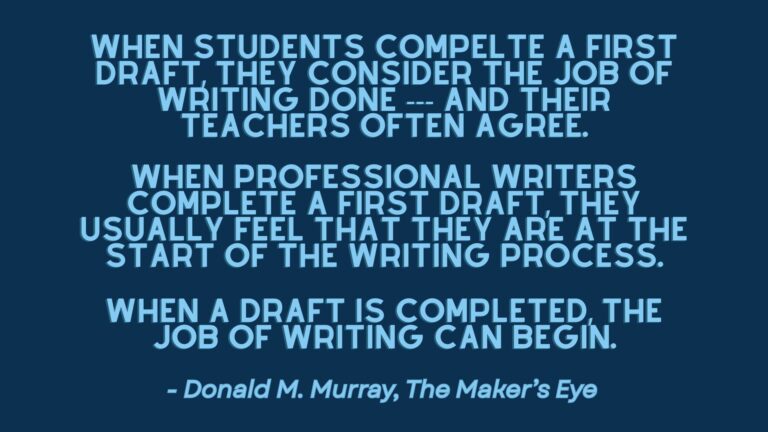
Drafting, revising, and editing all fall under the umbrella of “writing.” Too often, people think of writing as purely the generation of new text, but in reality, the vast majority of the work of writing happens after the first draft is done.

Revising and editing your own work can be challenging, but it is an essential skill that all serious writers must develop with practice. A professional editor can help you develop this skill by working alongside you, but even with a book coach, you’ll still be revising your early drafts yourself. 

We have a guide on self-editing your manuscript right here.

Getting feedback: Book coaching, writing groups, beta readers

The self-editing process shouldn’t happen in isolation. Writers should get feedback as they are drafting, though they must walk a delicate balance: being open-minded to critiques while also trusting their own writerly instincts. 

You have a number of options for gathering feedback.

Our book coaching service is designed for authors at any stage of the drafting process.During book coaching, an Invisible Ink editor works with you as you generate and revise drafts. Our job is to provide feedback and encouragement along the way, to act as a sounding board, and to help you stay accountable and productive.

Typically with book coaching, we’ll schedule regular face-to-face meetings with authors so we can have an active dialogue about the book as it develops. We’ll continue this relationship for as long as you find it useful. Often we’re by the author’s side all the way through publication.

For folks who have a partial or complete draft of a manuscript, another option is to undergo manuscript evaluation. A professional editor will read what you have, even if it’s mostly an outline or a few chapters or unfinished stories, and provide feedback and guidance on how to develop what you have into a more complete draft. This is a great, more affordable option for people who want professional feedback but aren’t ready for full professional editing yet.

Writing groups

Writing groups are one of the best ways to get feedback on your work as you’re drafting and revising. The connections and creative inspiration are icing on the cake. 

Where can you find writing groups? The best place to start is  your own community—local writing centers, libraries, book stores, and community centers often have writing meetups. You can also use Reddit forums and Substack to find digital writing groups. Normally, you won’t need to pay anything to be part of a writing group—just be willing to share your own feedback on others’ writing as part of the exchange. 

Beta readers

Beta readers are people who read unpublished manuscripts and provide their feedback. They are an important part of the revision and editing process, and it’s best to seek out beta readers before you start the latter stages of editing. 

Check out our full guide to finding beta readers, or watch this short reel from our Instagram for more guidance: 

How do you know when it’s time for a professional editor?

There is no easy answer to this question, because it will depend on how you like to work, what your budget is, and what pathway you plan to take to publication. 

How you publish changes how you edit

Authors today have more options than ever when it comes to publishing their work. For help designing your own pathway to publication, check out this article: Self-publishing vs. traditional publishing: Which one is right for you? 

Traditional publishing: If you plan to publish your book with a publishing house, you will very likely be assigned an editor by your agent or publishing house. However, folks who plan to publish through the traditional route still often go through manuscript evaluation or developmental editing with an independent editor to increase their chances of landing a publishing deal. A well-edited manuscript has a far better chance of landing you a deal than one that hasn’t been through the editing process. 

Hybrid and indie press: If you are working with a smaller publishing house, it’s very possible they will assign you an editor. Invisible Ink Editing has partnered with several small presses, so don’t be surprised if your indie publisher pairs you with an independent editing group like ours. 

Self-publish: The most successful self-published authors build their own publishing house, which includes hiring an editor. Typically, self-published authors may also hire a book coach as their editor early in the process, or undergo all three stages of book editing, broken down below. 

When to reach out to a professional editor

If you are self-publishing but not working with a book coach, then it’s up to you to decide when it’s right to work with a professional editor. 

Here are a few signs that it may be time: 

  • You can’t go any further yourself. You’ve written several drafts and revisions, and now you are just pushing around commas and changing words. You may still feel like there is some editing to do, but if all the big stuff is done, it may be time to call in a professional editor.
  • You’ve incorporated beta reader feedback. Some writers may choose to go through developmental editing before they send their manuscript out to beta readers, but others will wait until they’ve gotten beta-reader feedback to incorporate. Both approaches work.

Note: Most independent editors are booked out weeks or months in advance. Keep that in mind as you are planning your editing. It’s not a bad idea to reach out to a professional editor several weeks before you finish self-revision, or while your manuscript is out with your beta readers so you won’t have to wait several weeks before an editor can pick things up. 

Ready to submit your work?

If you think your work is ready for an editor, we want to see it! Use the form below to send us an excerpt, and one of the editors on our team will give you a free sample edit, plus advice on the best next step.

The different types of professional editing

Professional editing typically falls into three different stages. Most manuscripts will go through all three stages before they are published, though some authors may use different editors for different stages, or may forgo developmental editing if they’ve gone through a rigorous critiquing and self-revision process. 

The best thing to do is submit a sample of your manuscript and let an editor give you guidance on which level of editing is best for you. When you submit your manuscript, you’ll be matched up with the editor on the team who is the most experienced with your genre and whose schedule best aligns with your launch strategy. 

They will provide you a free sample edit of a portion of your manuscript and provide guidance on where to begin. They will recommend one of the following services: 

This is the earliest stage of professional editing, when your editor will be focused on the big-picture elements of your manuscript. They will read through the whole thing and take detailed notes on structure, plot, characters, style, setting—-all of the foundational elements of your book. They will compile a critique—at Invisible Ink, these are usually around 5–10 single-spaced pages for a full-length novel—with their feedback and guidance on how to address it. 

Developmental editing is the first stage of the editing process because it’s usually followed by significant revisions that add or remove content from the manuscript. There’s no point in moving on to the next stage until the heavy lifting of developmental editing is complete.

During the line editing phase, your editor will go much deeper into the actual text. They will provide in-line edits to improve syntax, smooth out clunky sentences, fix glaring errors such as incomplete sentences or repeated phrasing, and in some cases rewrite sentences or provide guidance for you to do more intensive rewriting on your own. The goal of line editing is to turn your developed manuscript into something that’s nearly ready for publication.

The final stage of book editing is proofreading, which is when your editor will go through the manuscript to tidy up any remaining typos, formatting issues, or other minor mistakes that slipped through the previous rounds of editing. Because line editing often requires so much revision, it inevitably introduces errors into the manuscript. Proofreading is the final polish that eliminates those errors before it goes to print. 

How long does the editing process take?

The entire editing process can vary from a few weeks to a few months, depending on a few variables. 

The length of the manuscript. Longer books obviously take more time to edit! This is why our editing prices are based on word count, not per project. 

The type of editing. Some rounds of editing take longer than others. Typically, line editing is the most time-consuming, usually 4–8 weeks for a full-length manuscript (80,000–100,000 words). Developmental editing and proofreading usually happen within 3–6 weeks for a full-length book, because editors are making fewer in-line changes as they are reading. 

Your own revision timelines. In between each step of the editing process, you’ll need to revise and edit. How quickly you do impacts the overall timeline. Your editor will discuss this timeline with you during the onboarding process. 

What to expect when working with an editor

Working with a professional editor may feel intimidating if you’ve never done it before, but take it from us: The author-editor relationship is a very powerful, special thing that can transform your writing and the trajectory of your work. 

When you work with an Invisible Ink editor, here’s what you can expect: 

A committed partnership. We see authors as partners. When you hire us, we become a member of your publishing team, and we are committed to seeing your work through until it’s ready for publication—and beyond! Even after our authors are published, we are there to champion and help promote their books on our socials, and we are always ready to work on their next books and series. A partnership with an Invisible Ink Editor often lasts for a writer’s entire career. 

Clear communication. You are trusting us with your work, so it’s our duty to make sure you know exactly what we are doing. Your editor will give you a clear estimated timeline at the start of the project and provide updates as they are moving through the manuscript so you can manage your own timeline. They will also be available for questions and discussions with you during and after the editing process. 

Fair prices based on industry standards. Pricing can vary wildly in the editing industry, but most experienced and legitimate editors will be within the rates tracked by the Editorial Freelancers Association

100% human feedback. Invisible Ink Editors don’t use AI to edit our clients’ work, ever. You can read all about it on our AI policy page. We guarantee that a human being (one with years of editorial experience) will read every word of your manuscript and write every piece of communication and feedback without the help of AI. That’s how we’ve been doing it for two decades, and we don’t see any reason to change that now. 

Want to find out what it’s like working with a professional editor firsthand? Submit a sample of your manuscript to Invisible Ink Editing, and we’ll be happy to show you. 
Categories
Writing Advice

How to come up with character names

Struggling to come up with a name better than “John Smith”? Here are a few strategies you can use to create interesting, memorable, and believable names for your characters.

5582403746_816e0a1114_b

Hannibal Lecter. Veruca Salt. Atticus Finch. Katniss Everdeen.

Simply reading the names above can summon vastly different emotions—anything from terror to admiration. The names are memorable not just because of whom they represent. These are successful character names because their sounds, shapes, and root meanings support the lives and environments of the characters and their stories.

The names of your main characters will be among the most common words to appear in your novel, so it’s important to get them right. Fortunately, there are a few tried and true ways to choose the perfect name.

Each author will have their own method for picking names, but if you’re ever feeling a bit lost on what to call your characters, try out these suggestions:

Get a baby name book

Many years ago, at a garage sale, I stumbled upon a tattered copy of The Baby Name Survey Book by Bruce Lansky. It’s since become an essential tool in my writing toolbox.

This book not only lists out more first names than you could ever hope to imagine—it also tells you what people think of that name based on survey data. To top it off, it lists the meaning of each name in its root language, as well as any celebrities who share that name. (Fair warning: It was published in 1998 and desperately needs an update, but it’s still useful.)

We all have our own associations with names, thanks to our personal relationships and experiences, but being able to see the patterns that names evoke is truly valuable. If you aren’t as interested in survey results, then I still highly recommend having a baby name book on hand simply because they list out so many names that may not be on your radar.

Of course, there are also websites with endless lists of baby names available. But sometimes opening a random page of a book is the best way to start.

Google it

Any character name you are considering must go through a Google search to make sure it’s not associated with anything or anyone unintended. Use quotation marks around the name to ensure that Google searches for the exact name, and be sure to try searching for some variants just in case.3422416038_4a1f0d42f8

Of course, most common names will probably have some matches. You may find, however, that your character shares a name with a public figure—like a politician or serial killer—that you weren’t aware of and don’t want associated with your novel.

Interrogate the name

Once you have a name or two you’re considering, try answering and experimenting with the following questions:

  • What are the character’s initials?
  • What nicknames would this character’s loved ones use?
  • What nicknames would this character’s enemies use?
  • Would the character like this name? (Note: They don’t have to!)
  • How would this character introduce themselves?
  • How would the character answer the question, “Why are you named ________?”
  • Is this character named after anyone?
  • Say the name aloud in all its variations. How does it sound?

By the time you finish this exercise, you will hopefully have a better understanding of the name itself, and know whether or not it’s right for your character.

Compare and contrast

Unless this is the first name you’re choosing for your book, the next step is to compare the name to other character names in your novel.

The best way to go about this is to write out each of your characters’ names in a list. Pay extra attention to the first letter in the names—if possible, your main characters’ names should all start with a different letter.

Of course, there are circumstances that call for similar names—telepathic identical twins, for instance—but overall, the more unique your characters names are from one another, the easier it will be on your reader.

For example, if you have a main character named Tyler and you want to add a new character named Taylor, you are almost guaranteed to confuse some readers, even if these two characters have starkly different personalities and behaviors.

How to choose a character’s last name

Coming up with a first name is one thing, but a last name can be a bit trickier. Thinking of something off the top of your head can result in awkward, unrealistic, and/or utterly boring results.

A good way to start is to consider your character’s ethnic, racial, religious, and demographic backgrounds. Unlike first names, which are typically chosen, a last name usually has a long history. Even if you don’t plan to reveal your character’s family background in any great detail, as the author, you should still have a full understanding of whether your character’s ancestors were Greek or Peruvian, or born on a distant planet in an alternate dimension.

Once you have that figured out, dig up a list of common last names that fit your character’s background. This is, once again, a great opportunity to use trusty Google—searches like “common Jewish last names” is more than likely to bring you solid results. (Just be sure to check out a few sites to make sure you’re seeing similar results.)

Of course, a common last name isn’t always what you want, so don’t be afraid to stray from the norm. But if you start out by finding a common last name and then playing with variations on that name, you’re much more likely to end up with a result that is believable and doesn’t catch your reader off guard.

Don’t latch on to it

After you’ve assigned a character name that feels right, it’s easy to become infatuated with the name. In an ideal world, your beta readers will always agree with you, but in some cases, you may find that you’re getting negative feedback around a particular name.

With any feedback, it’s important to weigh it carefully and with an open mind, particularly if you have several readers who all tell you the name doesn’t work. In such cases, it may be best to go back to the drawing board and try something different.

Ask your editor

If you’re still feeling conflicted when it comes time for a professional edit or critique, let your editor know when you submit your manuscript. It’s always useful for us to hear about the feedback you’ve already gotten, and any areas of the novel you’re concerned about.

How do you choose your character names? Any tips or tricks we missed?

—Liam Carnahan, Founder and Chief Editor

Categories
Self Publishing Advice Writing Advice

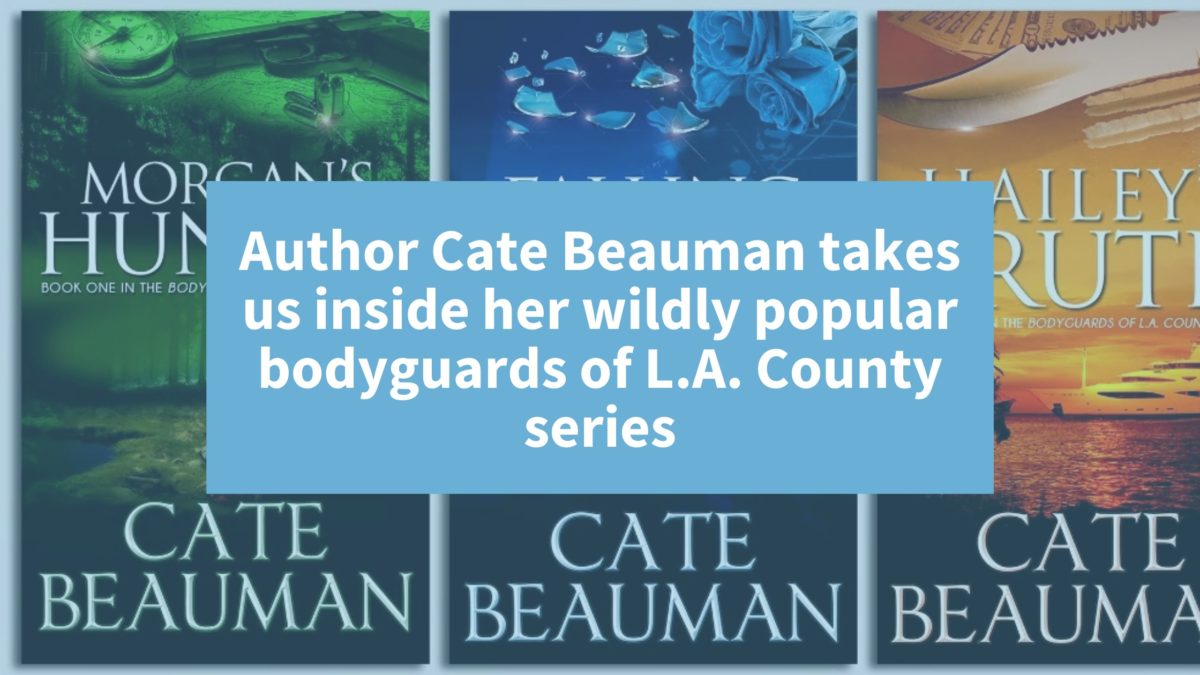
Author Cate Beauman takes us inside her wildly popular Bodyguards of L.A. County series

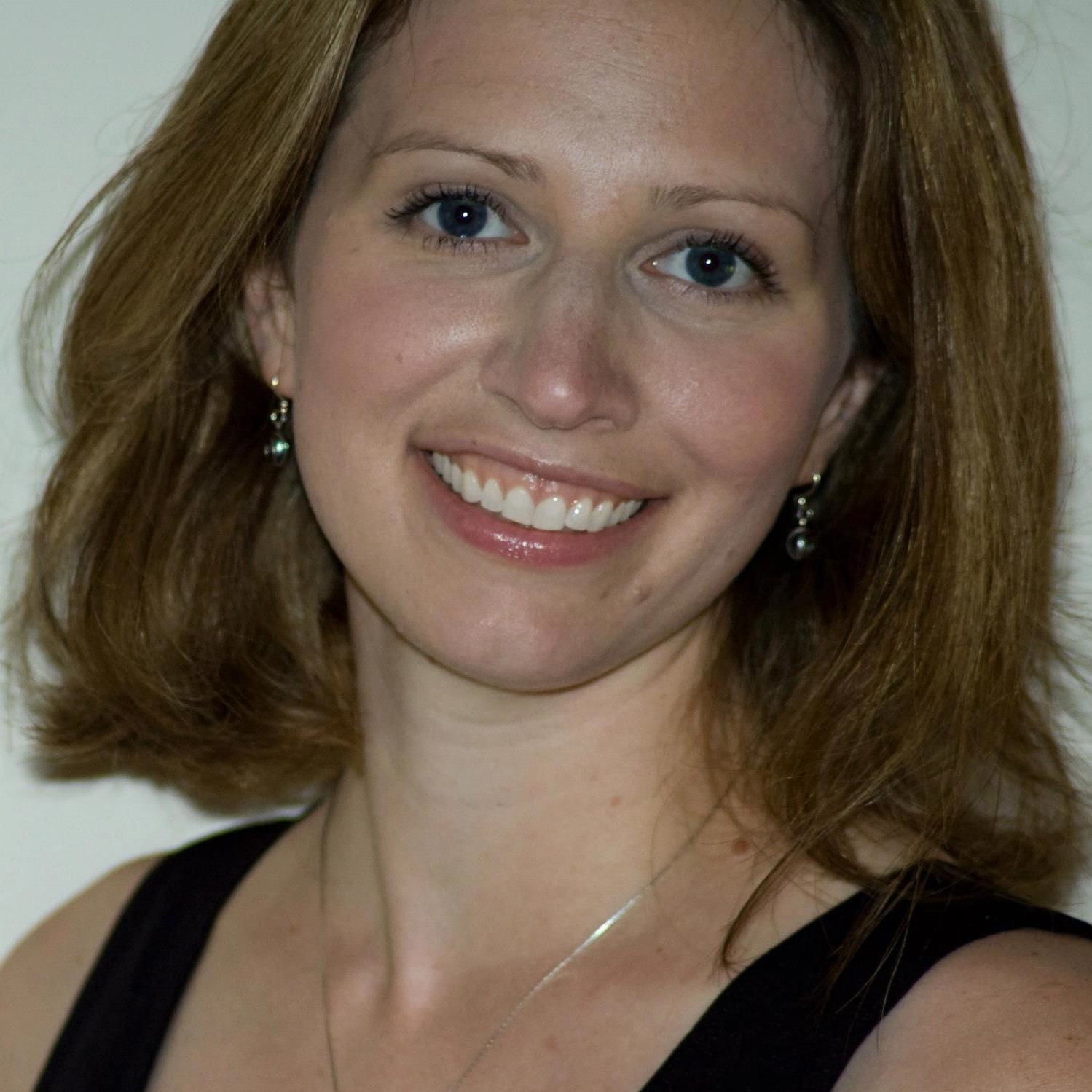
cate head shot

Cate Beauman fell into writing more than she dreamed of it. “Writing novels never made my bucket list,” she says. “One day I picked up a pad of paper and scribbled down the thoughts in my head. Next thing I knew, I had over 100,000 words. I’ve been obsessed ever since; now I can’t imagine doing anything else.”

A former New England resident, Cate now makes her home in North Carolina with her husband, two boys, and their St. Bernards, Bear and Jack.

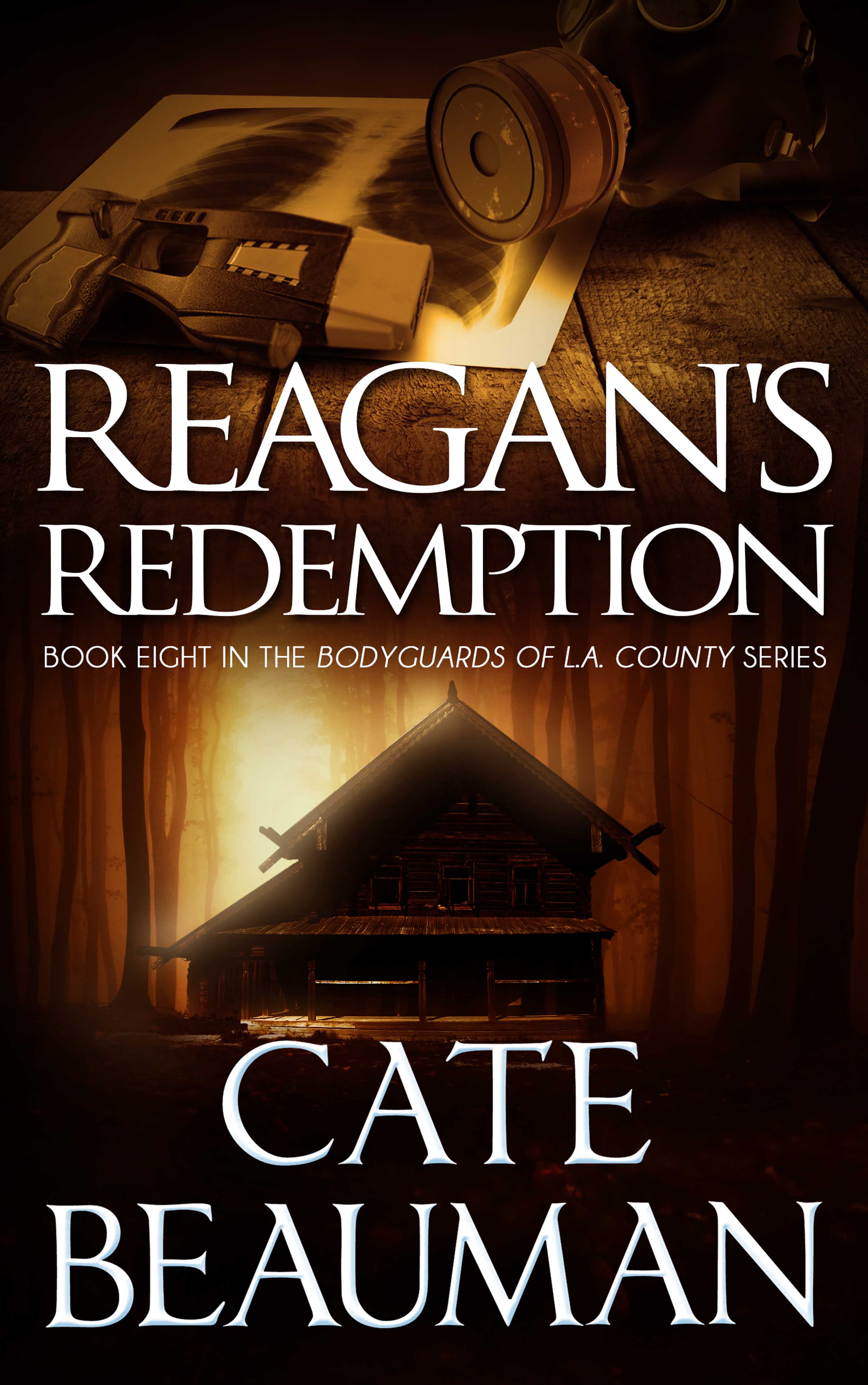
Cate is currently working on Reagan’s Redemption, the eighth novel in her best-selling romantic suspense series, The Bodyguards Of L.A. County.

For information on new releases, monthly giveaways, and upcoming events, sign up for Cate’s newsletter. Cate can be reached on her website, www.catebeauman.com, or on her Facebook page. You can follow Cate on Twitter @CateBeauman.

Tell us how you originally got the idea for the Bodyguards of L.A. County series.

I never planned to write a series. The thought never occurred to me as I wrote Morgan’s Hunter, the first novel in the series—and really, my first work as a serious writer. I was simply telling the story of a bodyguard who was protecting his feisty principal in the backwoods of Montana. But then I introduced Ethan and Sarah to the plot. As the manuscript started to unfold I became very intrigued with the idea of giving Ethan and Sarah a story of their own. Not long after finishing Morgan’s Hunter, I wrote Falling for Sarah, which was supposed to complete a two-book series. Then Austin and Hailey were added to the storyline, and I realized I had a series on my hands. The rest, you could say, is history!

Tell us about your upcoming book, Reagan’s Redemption. Who will we meet in this novel? What kind of excitement can we expect?Reagan's Redemption - Ebook

Reagan’s Redemption is the story of Doctor Reagan Rosner and her bodyguard, Shane Harper. Reagan is at a crossroads in her life after a heartbreaking and unexpected tragedy. Unsure of what to do, she joins The Appalachia Project, a government-run program aimed at bringing aid to some of America’s poorest citizens.

Shane Harper is assigned to keep an eye on Reagan and the pharmaceuticals they have on hand in the odd and often hostile little town of Black Bear Gap.

As Reagan and Shane work together to help a reluctant community, they uncover secrets the town intends to keep hidden at all costs.

You are a master at balancing both romance and suspense in your novels. How do you make sure you give your readers a healthy dose of both, without crossing any lines?

That’s a tricky question. Honestly, I’m not exactly sure how I do it. I love romantic suspense. I’ve read the genre for years, so I think I try hard to give my readers what I would want. Romance always plays the central theme in my stories, but sprinkling in elements of danger really adds something special. Love and romance are hard enough, but when the characters’ lives are in peril and the odds stacked against them, it heightens the entire experience. I love weaving the two together.

What sort of lessons do you hope your readers take away from your novels?

I don’t typically write with messages for my readers. Basically, reality bites sometimes and I love to give my readers a place where they can go and get lost in someone else’s problems for a while. Mostly the stories I tell are for pure entertainment. I strive to make my characters flawed and relatable and their experiences exciting yet plausible.

You’re quite the prolific author. How do you keep coming up with fresh ideas on a similar theme?

I spend my time off watching lots and lots of crime television. When I find myself running low on ideas, I sit down with a pad of paper, turn on the television, and wait for a documentary or situation on a crime show to pique my interest. When I see something special my brain kicks into high gear and ideas just start flying. Sometimes I can see scenes for the new story I will tell in my head right then and there—one of the true gifts of an overactive imagination!

What is your editing process like?

Typically I write in a three-draft form. First draft is getting the ideas down in a loose story form. My second draft is when I get the story right by adding more of the emotive and physical descriptions, and the third is when I run my manuscript through a program called AutoCrit Editing Wizard. The program helps me find overused words, slow passages, so on and so forth so that when I send my work off to Liam at Invisible Ink Editing he’ll have as clean of a copy as I can give him.

What is your publishing process like?

I self-publish, so my publicist and I handle the workload ourselves. We do lots of blog tours and interviews. I also spend a lot of time with my Facebook fans on my author page getting them ready for the launch of each new story. I think that is one of my favorite parts of this whole journey—meeting and interacting with so many great people.

Do you have any advice for budding authors?

Never give up on your dreams. When I started out in this business I almost quit after the first editor I contacted told me I couldn’t write and I shouldn’t quit my day job. Luckily, I have a lot of really supportive people in my life who encouraged me to keep writing. I’m glad I did because telling stories is one of my biggest passions and has changed my life for the better. Write because you love it and the rest usually falls into place.

Last question—you are being pursued by thieves intent on stealing your latest manuscript. Which of the hunks from your book would you want to protect you?

Oh, wow. This is truly an impossible question to answer! All of the agents from Ethan Cooke Security are more than capable of keeping my manuscript and me safe, but they’re all so different and intriguing in their own ways. It’s kind of like asking which of your children do you love more. I love them both with the same power but their unique qualities are what make me adore them. How’s that for an answer?

Categories
Self Publishing Advice Writing Advice

Your indie novel is a (beautiful) gutter

It’s an ugly metaphor, but it’s one that makes sense to me as a professional editor. Think of your story as a gutter running along the side of a house. Making up that gutter is the meat of your story: plot, characterization, setting, style—everything. Your goal is to nab your reader and pull him or her through the gutter, not unlike the itsy bitsy spider. But your reader needs to make it smoothly from the opening of the gutter (your first page) to the spout at the end (your final page).

Readers must pass through your novel like water through a gutter.

Unfortunately, as anyone who’s spent time on a roof will tell you, gutters get clogged. Big clumps of muck block the passageway, making it impossible for water—your readers—to pass through unhindered.

When you sit down for a proofreading or editing session, you want to clear out all of the gunk until your gutters are clean enough to eat out of. Then you can focus on enhancing the most valuable parts of the story. It can be difficult, however, to see all that gunk when you’re so immersed in the narrative, and that’s why a second set of eyes is a crucial step in the editing process.

My fellow book editors and I spend much of our time identifying and eliminating the muck from manuscripts, particularly when we provide a literary edit. However, indie authors also need to be on the lookout for the gunk when reviewing their own pieces. So don’t be afraid to get on those rubber gloves and start cleaning those gutters, baby.

—Liam Carnahan, Founder and Chief Editor of Invisible Ink Editing