An author’s guide to the editing process
In the lifespan of a novel, it’s easy to think that editing comes at the end.
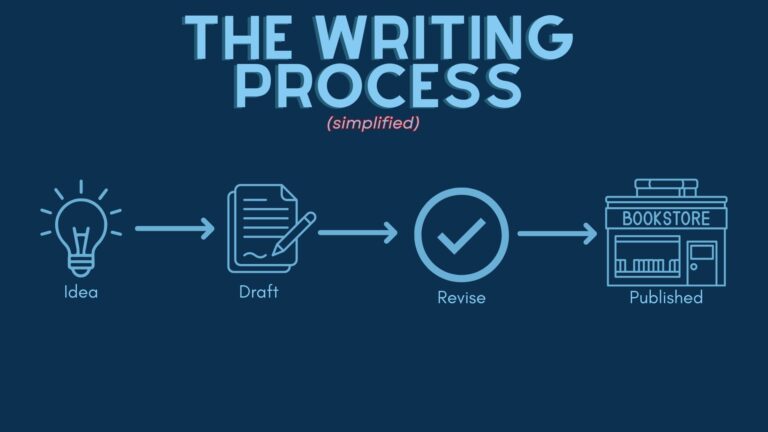
In its most simplified form, you might map the process of writing a book like this:
First, a writer has an idea.
Then a writer writes several drafts.
Then an editor revises the book.
Then a publisher gets the book on shelves.
In reality, it’s a lot more complicated than that, because “editing” isn’t just one thing—there are many different kinds of editing, and they happen at different stages of the ideation, drafting, and revision process. The pathway to publication also plays a big role in how and when editing comes into play.
The process looks more like this:
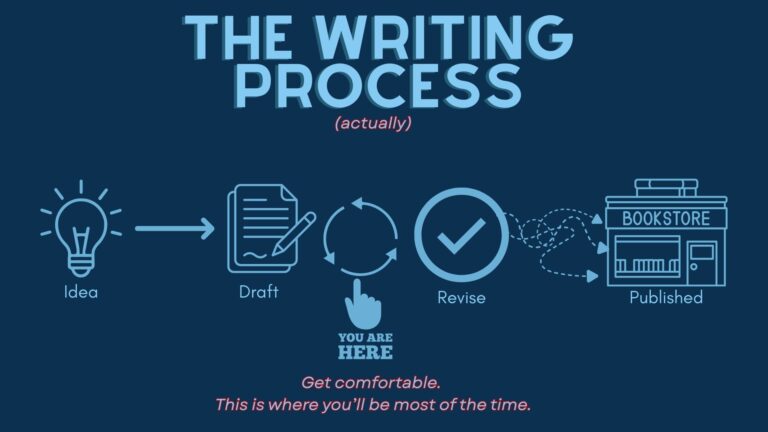
In other words, it’s complicated! But the revision and editing process is vital, and there is no pathway to successful publication without editing.
With the right editor (or editors) in your corner, the whole process is easier to manage, and will help you grow and evolve as a writer.
Invisible Ink has been collaborating with authors since 2012. We’ve broken down the entire editing process and answered the most-common questions we receive from authors entering the editing process for the first time.
Revising vs. editing vs. drafting: What do these terms mean?
Before we get too far down the editing rabbit hole, let’s define a few key terms. These three words are often conflated, but in the editing and publishing world, they have distinct meanings:
Revising and editing both refer to the process of going back over a piece of writing to refine and improve it. But these two words refer to slightly different approaches to this process:
Revising is about big picture changes: plot adjustments, adding or changing characters, reworking the structure of your book, and so on.
Editing has more to do with adjusting the text itself. Refining language, rewriting sections for more clarity, tightening the syntax, double-checking grammar.
There is a lot of overlap between revising and editing, and even professional editors will sometimes use these two terms interchangeably. However, for authors, revising and editing require different mindsets and different relationships with professional editors—more on that later in this article.
Drafting is another related term that refers to the entire process of turning an idea into a manuscript. The drafts you create are a result of revision, and once you are done drafting, you’ll be ready to move into the editing stage.
The art of self-revision and editing
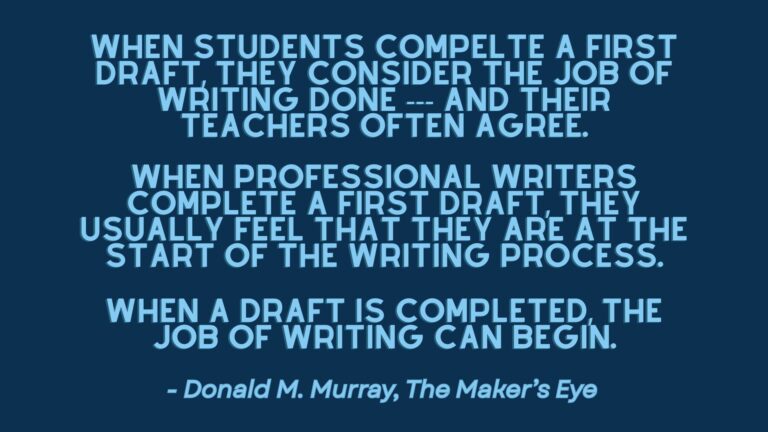
Drafting, revising, and editing all fall under the umbrella of “writing.” Too often, people think of writing as purely the generation of new text, but in reality, the vast majority of the work of writing happens after the first draft is done.
Revising and editing your own work can be challenging, but it is an essential skill that all serious writers must develop with practice. A professional editor can help you develop this skill by working alongside you, but even with a book coach, you’ll still be revising your early drafts yourself.
We have a guide on self-editing your manuscript right here.
Getting feedback: Book coaching, writing groups, beta readers
The self-editing process shouldn’t happen in isolation. Writers should get feedback as they are drafting, though they must walk a delicate balance: being open-minded to critiques while also trusting their own writerly instincts.
You have a number of options for gathering feedback.
Our book coaching service is designed for authors at any stage of the drafting process.During book coaching, an Invisible Ink editor works with you as you generate and revise drafts. Our job is to provide feedback and encouragement along the way, to act as a sounding board, and to help you stay accountable and productive.
Typically with book coaching, we’ll schedule regular face-to-face meetings with authors so we can have an active dialogue about the book as it develops. We’ll continue this relationship for as long as you find it useful. Often we’re by the author’s side all the way through publication.
For folks who have a partial or complete draft of a manuscript, another option is to undergo manuscript evaluation. A professional editor will read what you have, even if it’s mostly an outline or a few chapters or unfinished stories, and provide feedback and guidance on how to develop what you have into a more complete draft. This is a great, more affordable option for people who want professional feedback but aren’t ready for full professional editing yet.
Writing groups
Writing groups are one of the best ways to get feedback on your work as you’re drafting and revising. The connections and creative inspiration are icing on the cake.
Where can you find writing groups? The best place to start is your own community—local writing centers, libraries, book stores, and community centers often have writing meetups. You can also use Reddit forums and Substack to find digital writing groups. Normally, you won’t need to pay anything to be part of a writing group—just be willing to share your own feedback on others’ writing as part of the exchange.
Beta readers
Beta readers are people who read unpublished manuscripts and provide their feedback. They are an important part of the revision and editing process, and it’s best to seek out beta readers before you start the latter stages of editing.
Check out our full guide to finding beta readers, or watch this short reel from our Instagram for more guidance:
How do you know when it’s time for a professional editor?
There is no easy answer to this question, because it will depend on how you like to work, what your budget is, and what pathway you plan to take to publication.
How you publish changes how you edit
Authors today have more options than ever when it comes to publishing their work. For help designing your own pathway to publication, check out this article: Self-publishing vs. traditional publishing: Which one is right for you?
Traditional publishing: If you plan to publish your book with a publishing house, you will very likely be assigned an editor by your agent or publishing house. However, folks who plan to publish through the traditional route still often go through manuscript evaluation or developmental editing with an independent editor to increase their chances of landing a publishing deal. A well-edited manuscript has a far better chance of landing you a deal than one that hasn’t been through the editing process.
Hybrid and indie press: If you are working with a smaller publishing house, it’s very possible they will assign you an editor. Invisible Ink Editing has partnered with several small presses, so don’t be surprised if your indie publisher pairs you with an independent editing group like ours.
Self-publish: The most successful self-published authors build their own publishing house, which includes hiring an editor. Typically, self-published authors may also hire a book coach as their editor early in the process, or undergo all three stages of book editing, broken down below.
When to reach out to a professional editor
If you are self-publishing but not working with a book coach, then it’s up to you to decide when it’s right to work with a professional editor.
Here are a few signs that it may be time:
- You can’t go any further yourself. You’ve written several drafts and revisions, and now you are just pushing around commas and changing words. You may still feel like there is some editing to do, but if all the big stuff is done, it may be time to call in a professional editor.
- You’ve incorporated beta reader feedback. Some writers may choose to go through developmental editing before they send their manuscript out to beta readers, but others will wait until they’ve gotten beta-reader feedback to incorporate. Both approaches work.
Note: Most independent editors are booked out weeks or months in advance. Keep that in mind as you are planning your editing. It’s not a bad idea to reach out to a professional editor several weeks before you finish self-revision, or while your manuscript is out with your beta readers so you won’t have to wait several weeks before an editor can pick things up.
Ready to submit your work?
If you think your work is ready for an editor, we want to see it! Use the form below to send us an excerpt, and one of the editors on our team will give you a free sample edit, plus advice on the best next step.
The different types of professional editing
Professional editing typically falls into three different stages. Most manuscripts will go through all three stages before they are published, though some authors may use different editors for different stages, or may forgo developmental editing if they’ve gone through a rigorous critiquing and self-revision process.
The best thing to do is submit a sample of your manuscript and let an editor give you guidance on which level of editing is best for you. When you submit your manuscript, you’ll be matched up with the editor on the team who is the most experienced with your genre and whose schedule best aligns with your launch strategy.
They will provide you a free sample edit of a portion of your manuscript and provide guidance on where to begin. They will recommend one of the following services:
This is the earliest stage of professional editing, when your editor will be focused on the big-picture elements of your manuscript. They will read through the whole thing and take detailed notes on structure, plot, characters, style, setting—-all of the foundational elements of your book. They will compile a critique—at Invisible Ink, these are usually around 5–10 single-spaced pages for a full-length novel—with their feedback and guidance on how to address it.
Developmental editing is the first stage of the editing process because it’s usually followed by significant revisions that add or remove content from the manuscript. There’s no point in moving on to the next stage until the heavy lifting of developmental editing is complete.
During the line editing phase, your editor will go much deeper into the actual text. They will provide in-line edits to improve syntax, smooth out clunky sentences, fix glaring errors such as incomplete sentences or repeated phrasing, and in some cases rewrite sentences or provide guidance for you to do more intensive rewriting on your own. The goal of line editing is to turn your developed manuscript into something that’s nearly ready for publication.
The final stage of book editing is proofreading, which is when your editor will go through the manuscript to tidy up any remaining typos, formatting issues, or other minor mistakes that slipped through the previous rounds of editing. Because line editing often requires so much revision, it inevitably introduces errors into the manuscript. Proofreading is the final polish that eliminates those errors before it goes to print.
How long does the editing process take?
The entire editing process can vary from a few weeks to a few months, depending on a few variables.
The length of the manuscript. Longer books obviously take more time to edit! This is why our editing prices are based on word count, not per project.
The type of editing. Some rounds of editing take longer than others. Typically, line editing is the most time-consuming, usually 4–8 weeks for a full-length manuscript (80,000–100,000 words). Developmental editing and proofreading usually happen within 3–6 weeks for a full-length book, because editors are making fewer in-line changes as they are reading.
Your own revision timelines. In between each step of the editing process, you’ll need to revise and edit. How quickly you do impacts the overall timeline. Your editor will discuss this timeline with you during the onboarding process.
What to expect when working with an editor
Working with a professional editor may feel intimidating if you’ve never done it before, but take it from us: The author-editor relationship is a very powerful, special thing that can transform your writing and the trajectory of your work.
When you work with an Invisible Ink editor, here’s what you can expect:
A committed partnership. We see authors as partners. When you hire us, we become a member of your publishing team, and we are committed to seeing your work through until it’s ready for publication—and beyond! Even after our authors are published, we are there to champion and help promote their books on our socials, and we are always ready to work on their next books and series. A partnership with an Invisible Ink Editor often lasts for a writer’s entire career.
Clear communication. You are trusting us with your work, so it’s our duty to make sure you know exactly what we are doing. Your editor will give you a clear estimated timeline at the start of the project and provide updates as they are moving through the manuscript so you can manage your own timeline. They will also be available for questions and discussions with you during and after the editing process.
Fair prices based on industry standards. Pricing can vary wildly in the editing industry, but most experienced and legitimate editors will be within the rates tracked by the Editorial Freelancers Association.
100% human feedback. Invisible Ink Editors don’t use AI to edit our clients’ work, ever. You can read all about it on our AI policy page. We guarantee that a human being (one with years of editorial experience) will read every word of your manuscript and write every piece of communication and feedback without the help of AI. That’s how we’ve been doing it for two decades, and we don’t see any reason to change that now.
Want to find out what it’s like working with a professional editor firsthand? Submit a sample of your manuscript to Invisible Ink Editing, and we’ll be happy to show you.